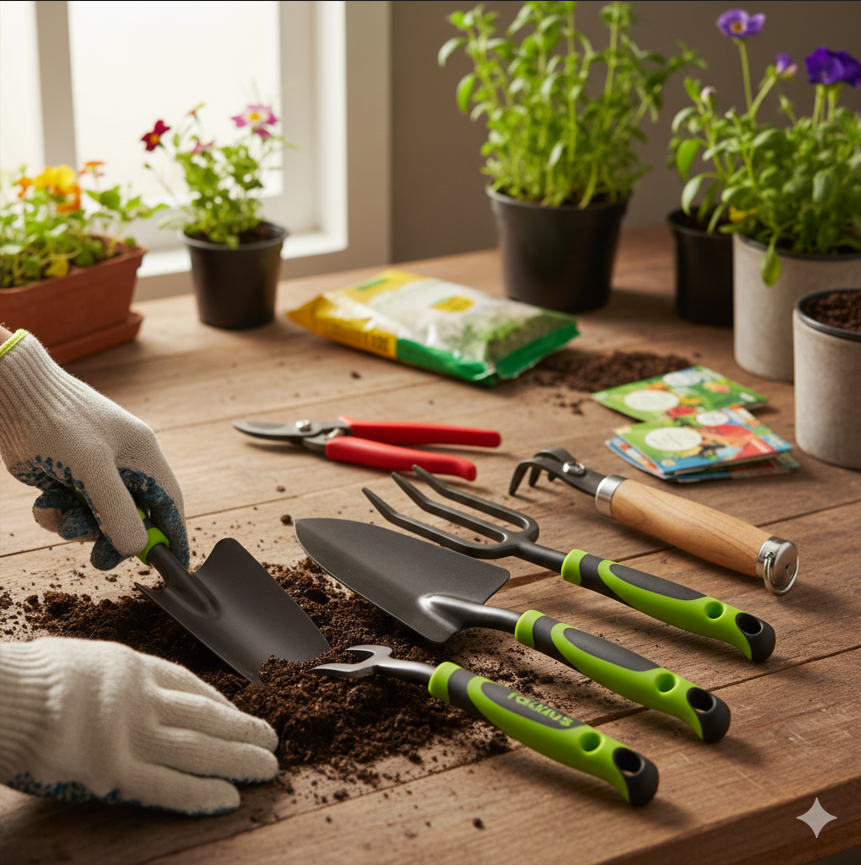
In 2026, small hand-held garden tools have transitioned from simple metal implements into ergonomically advanced systems designed to maximize leverage while minimizing physical strain. Whether you are maintaining a high-rise balcony garden or a sprawling suburban flower bed, the “big three” remains the trowel, the transplanter, and the hand fork. However, modern manufacturing has introduced materials like forged boron steel and reinforced fiberglass that make these compact tools nearly indestructible, allowing gardeners to perform precise tasks in tight spaces that larger long-handled tools simply cannot reach.
I use hand tools often, and they make my work easier. They help me stay organized, finish faster, and keep full control over every step.
The Ultimate Guide to Small Garden Tools: Essential Gear for 2026
There is a unique kind of magic in getting your hands into the dirt, but any experienced gardener will tell you that the wrong tools can quickly turn a peaceful hobby into a literal pain in the wrist. As we move through 2026, the world of gardening has seen a quiet revolution. We’ve moved past the era of “disposable” stamped-metal tools and entered a golden age of ergonomics, high-tech materials, and heirloom quality.
Whether you are tending to a lush balcony “jungle” in the city or a backyard raised-bed sanctuary, your tools are the bridge between your vision and the soil. Modern hand-held tools are no longer just metal implements; they are precision-engineered systems designed to maximize leverage while minimizing physical strain.
In this guide, we will explore the essential kit you need to start your small garden, the innovations making gardening more accessible than ever, and how to choose tools that will last a lifetime.
1. The Core Essentials: Your “Big Three” Handheld Kit
If you are just starting out, you don’t need a shed full of equipment. For 90% of container and small-plot gardening tasks, a well-curated selection of three or four handheld tools is more than enough. In 2026, these are the “must-haves.”
The Bypass Hand Pruner
Think of these as the professional scissors of the garden. Unlike “anvil” pruners—which crush stems against a flat surface—bypass pruners have two blades that pass by each other. This creates a surgical, clean cut that allows the plant to heal faster and prevents disease.
-
What to look for: Look for brands like Felco or Gardena. The best models in 2026 feature replaceable blades and “soft-touch” grips that prevent your hand from slipping even when it’s sweaty or damp.
The Hand Trowel
The humble trowel is your workhorse. You’ll use it for digging planting holes, moving compost, and mixing fertilizers.
-
The 2026 Update: Premium trowels now feature a “contoured neck.” This is a slight curve where the blade meets the handle, specifically designed to prevent the tool from snapping or bending when you hit a stubborn rock or heavy clay.
The Hand Fork (Cultivator)
If the trowel is the shovel, the hand fork is the rake. It is essential for breaking up the hard surface crust of the soil to let water and air reach the roots. Because it has tines rather than a solid blade, it allows you to aerate the soil without accidentally slicing through the shallow roots of your neighboring plants.
The Transplanter
At first glance, it looks like a skinny trowel. However, the transplanter is a precision instrument. Most modern versions come with etched depth markers (inches or centimeters) on the blade. This is critical for ensuring that delicate bulbs and seedlings are placed at exactly the correct depth—not too shallow to dry out, and not too deep to struggle to sprout.
2. Japanese Innovation: The Rise of the Multi-Tool
In recent years, Japanese-style hand tools have dominated the premium market. Their popularity stems from a philosophy of “multi-functionality”—why carry three tools when one can do it all?
The Hori Hori Knife
Often called the “Swiss Army Knife” of gardening, the Hori Hori has replaced the traditional trowel for many professional horticulturists.
-
Dual-Edge Design: One side of the blade is a straight razor edge for precision weeding or slicing open bags of mulch. The other side is serrated, allowing you to saw through thick, woody roots that would stop a trowel in its tracks.
-
Industrial Strength: Models made from Japanese 425 stainless steel are strong enough to act as a small pry bar, helping you pop deep-rooted weeds like dandelions straight out of the ground.
The Nejiri Gama (Hand Hoe)
This tool looks like a small, angled scythe. It is feather-light and designed for “surgical” weeding. You can use the pointed tip to hook weeds out of tiny cracks in stone paths, or use the sharp blade to skim just beneath the soil surface, severing weed roots with a single flick of the wrist.
3. Ergonomics: Gardening Without the Ache
One of the most significant shifts in 2026 is the focus on joint health. Gardening is physical work, and repetitive motions can lead to carpal tunnel or aggravate arthritis. Modern tool design has solved this with three key innovations:
Radius Garden Grips
Standard straight-handled tools force your wrist into an awkward, cocked position. Modern “Radius” grips feature a circular or curved handle. This allows you to keep your wrist in a “neutral” straight line, shifting the workload from your small hand muscles to the much stronger muscles in your forearm.
Lightweight Composites
For those who find heavy steel tools fatiguing, carbon-fiber reinforced plastics are the answer. Brands like Fiskars have developed composites that are 30% lighter than traditional steel but just as rigid. They are perfect for light-to-medium soil work and won’t tire out your arms during a long afternoon in the sun.
High-Visibility “No-Lost” Colors
We have all done it—put a tool down in a pile of weeds and lost it for the rest of the season. A major trend in 2026 is the use of “High-Vis” handles. Neon orange, bright teal, and electric green grips make your tools easy to spot against the brown and green of the garden, protecting your investment from the lawnmower or the compost pile.
4. Comparing Tool Materials
Choosing the right material depends on your soil type and how much maintenance you’re willing to do.
| Material Type | Pros | Cons | Maintenance |
| Stainless Steel | Rust-proof, easy to clean, stays shiny. | Can be brittle; might snap in heavy clay. | Low |
| Carbon Steel | Incredibly strong; stays sharp the longest. | Will rust quickly if not oiled. | Medium |
| Aluminum | Feather-light; will never rust. | Can bend under high pressure or prying. | Low |
| Forged Boron | The toughest metal available; professional grade. | Usually the most expensive option. | Medium |
5. Maintenance: How to Make Your Tools Last Decades
In 2026, the “Buy Once, Cry Once” philosophy is more relevant than ever. If you invest in high-quality tools, a few minutes of maintenance will ensure they last a lifetime.
-
The Clean-Down: Use a stiff brush to remove dirt after every session. Soil holds moisture against the metal, which is the primary cause of rust.
-
The Oil Hack: Keep a bucket of dry sand mixed with a little bit of mineral oil in your shed. Plunging your metal tools into the sand a few times cleans the blades and leaves a microscopic protective oil coating.
-
Sharpening: Don’t be afraid to sharpen your trowels and hoes! A simple diamond sharpening stone or mill file can put a fresh edge on your gear. A sharp tool slices through soil and roots with half the effort of a dull one.
Frequently Asked Questions
1. Are wooden handles better than plastic?
It depends on your preference. Wooden handles (like FSC-certified Ash) are excellent for shock absorption and they actually mold to the shape of your hand over time. However, if you are the type of gardener who occasionally leaves tools out in the rain, high-grade ergonomic plastics or fiberglass will be more durable.
2. Why should I spend $60 on pruners when I can get them for $10?
Quality pruners like Felco are “lifetime” tools. Every single part—from the spring to the smallest screw—is replaceable. Cheap pruners are designed to be thrown away when they get dull or break. In the long run, the expensive pair is actually cheaper and better for the environment.
3. What is the best tool for weeding a small container?
A hand fork or a Nejiri Gama is best. They allow you to get into the tight spaces between your plants without disturbing the potting mix too much.
4. Do I really need a transplanter if I have a trowel?
You don’t need one, but you’ll want one. The narrow blade of a transplanter is much better for sliding into the small gaps of a seedling tray or planting close to other flowers without hitting their roots.
Conclusion: Start Small, Buy Quality
The secret to a successful small garden isn’t having every gadget on the market—it’s having a few tools that feel like an extension of your own hand. In 2026, we have more choices than ever for ergonomic, durable, and beautiful equipment. By choosing forged-steel or high-quality stainless tools from heritage brands like Sneeboer or DeWit, you aren’t just buying a tool; you’re investing in the future of your garden and your physical well-being.