
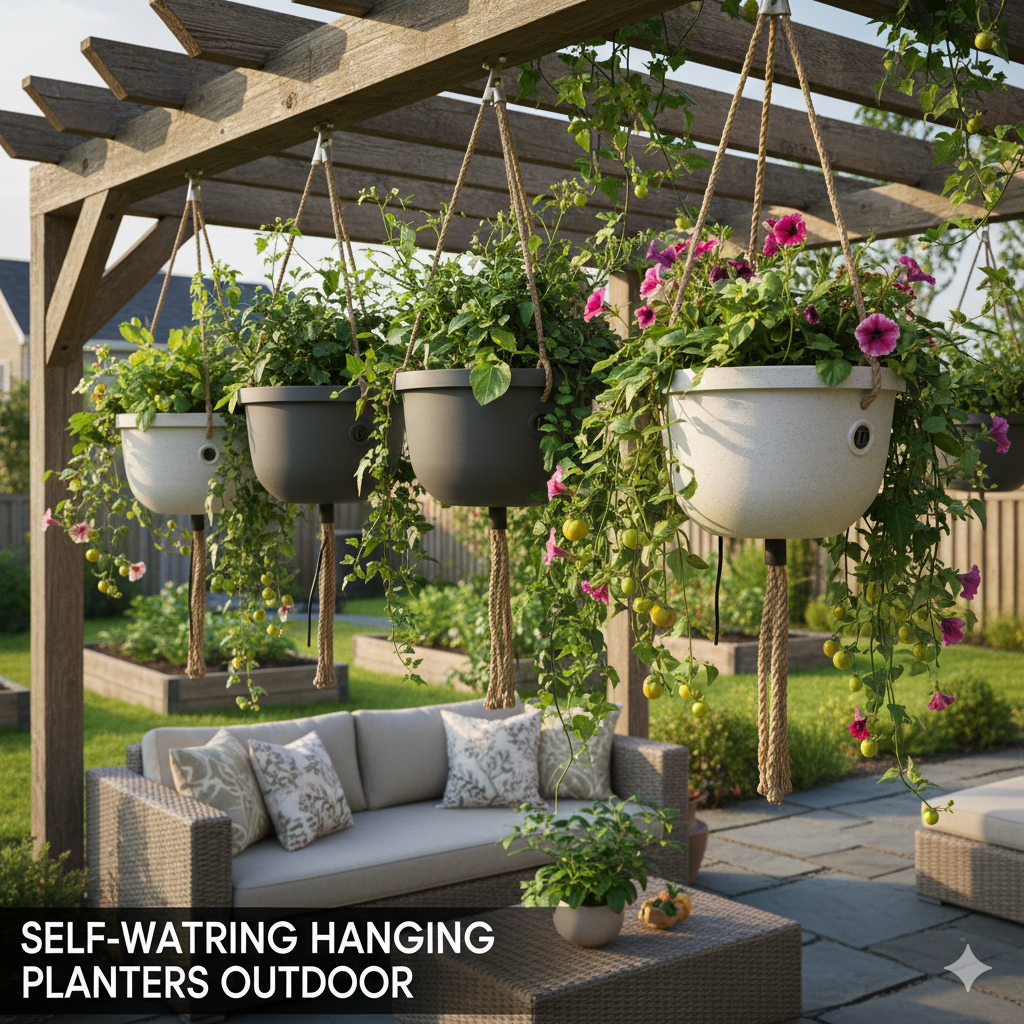
Gardening is relaxing and rewarding, but it takes regular care, especially when watering plants. If you’ve struggled with watering hanging planters, you know it can be difficult to keep them healthy. This is where self-watering hanging planters come in. These planters help you grow beautiful plants in your outdoor space without worrying about over or under-watering.
In this guide, you’ll learn the benefits of self-watering hanging planters, how they work, how to choose the best ones, and tips for keeping your plants healthy and happy.
What Are Self-Watering Hanging Planters?
Self-watering hanging planters are a convenient and efficient way to care for your plants without the need for daily watering. These planters have a built-in watering system that allows the plant to take the right amount of water as needed. This helps to prevent over-watering or under-watering, which are common problems with traditional hanging baskets.
The basic design of self-watering planters includes two main components:
-
Water Reservoir: This is a compartment at the bottom of the planter that holds water. It acts like a storage tank for your plant.
-
Wicking System: This system draws water from the reservoir into the soil of the plant. It makes sure that the plant gets the water it needs without you having to water it constantly.
Self-watering planters are perfect for people who want to enjoy gardening but don’t have the time to water plants every day. They are also great for people who travel often or live in areas where watering plants regularly can be difficult due to weather conditions.
Benefits of Using Self-Watering Hanging Planters
-
Less Frequent Watering
One of the biggest advantages of self-watering planters is that they reduce the need for frequent watering. Once set up, these planters can water your plants for days or even weeks at a time, depending on the size of the reservoir and the weather. This is especially helpful if you have a busy schedule or if you’re often away from home. -
Better Water Efficiency
These planters ensure that the plant gets the right amount of water. Traditional watering methods often lead to waste, with water spilling over the sides of planters or running off the surface. With a self-watering planter, the water goes directly to the roots, which helps your plants grow better and more efficiently. -
Healthier Plants
Over-watering and under-watering are two of the most common problems that lead to unhealthy plants. With self-watering hanging planters, the plant has access to just the right amount of water, helping it thrive. This reduces the risk of root rot and other water-related issues. -
Convenient for Hanging Plants
Hanging plants can be tricky to care for because they are often out of easy reach. Self-watering hanging planters solve this issue by providing a simple, low-maintenance solution to keeping plants hydrated. You won’t need to climb a ladder or use a watering can to reach them. -
Perfect for Outdoors
Self-watering planters are ideal for outdoor environments, where the weather can change unexpectedly. They help your plants survive through dry spells or even rainy periods. Whether it’s a hot summer day or a rainy afternoon, your plants will always have the right amount of water.
How Do Self-Watering Hanging Planters Work?
Self-watering hanging planters use a very simple but effective mechanism to deliver water to your plants. The key to understanding how these planters work lies in the system’s design, which is both simple and practical.
-
Water Reservoir
The water reservoir is the bottom compartment of the planter that stores water. It is usually filled manually but can hold a significant amount of water. The reservoir’s purpose is to ensure that there’s a constant supply of water available for your plants. -
Wicking System
The wicking system is the heart of the self-watering process. It uses a wick or other material that draws water from the reservoir up into the soil. This happens through capillary action, which is a process where water moves through a material (like the wick) and is absorbed by the plant’s roots. -
Plant Soil
The soil in a self-watering hanging planter is designed to work with the watering system. It is usually made from a special mix that allows for proper water absorption and drainage. When the plant needs water, the wick pulls the moisture from the reservoir into the soil. The plant’s roots then absorb the water as needed. -
Water Control
Most self-watering planters come with a built-in water level indicator. This feature allows you to easily monitor how much water is left in the reservoir, so you know when to refill it. The system typically only requires refilling when the water level in the reservoir is low, which is much easier than watering plants manually.
Choosing the Best Self-Watering Hanging Planters
When selecting a self-watering hanging planter for your outdoor garden, there are several factors to consider. Here are some tips to help you choose the best one for your needs:
-
Size of the Planter
Choose a planter that suits the size of your plant. Make sure the planter has enough space for the roots to grow and thrive. Larger planters will hold more water, which is ideal for plants that require more moisture. -
Material
Self-watering planters are available in various materials, such as plastic, ceramic, and metal. Each material has its advantages and disadvantages. For example, plastic planters are lightweight and durable, while ceramic planters may look more decorative but can be heavier. Choose a material that fits your style and needs. -
Water Capacity
Consider the size of the water reservoir when choosing a self-watering hanging planter. A larger reservoir means you won’t need to refill it as often. If you have a busy schedule or go on frequent trips, opt for a planter with a larger water capacity. -
Design and Style
Self-watering hanging planters come in a variety of designs and styles. Some have simple, modern looks, while others feature more decorative details. Choose a design that complements your outdoor space and matches your gardening style. -
Price and Quality
Price is always an important factor. While it might be tempting to go for the cheapest option, remember that quality matters when it comes to planters. A well-built, durable self-watering planter can save you time and money in the long run. Look for options that offer both value and reliability.