
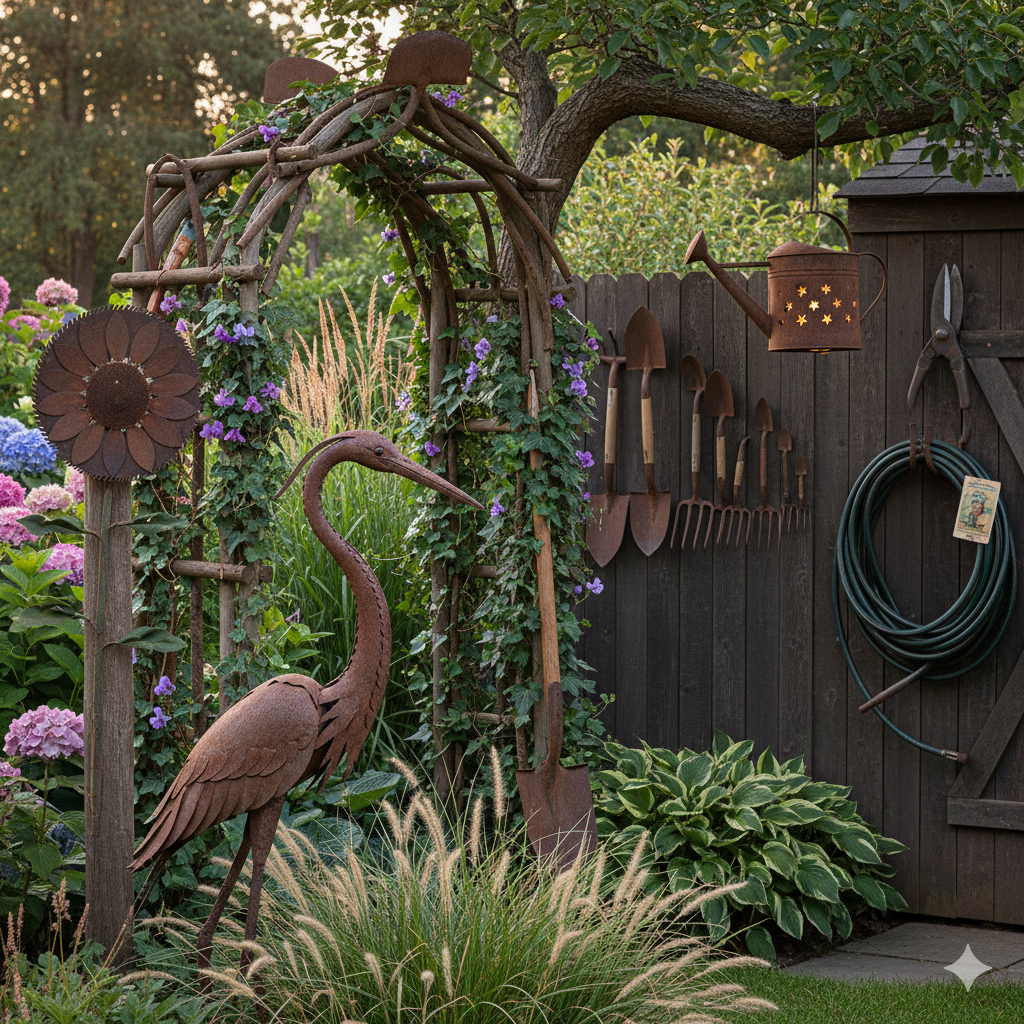
In 2026, yard art made from old garden tools has emerged as a cornerstone of the “Sustainable Aesthetic” movement. Instead of discarding rusted shovels or broken rakes, homeowners are embracing upcycling to create unique, weathered sculptures that tell a story of past labor while adding rustic charm to modern landscapes. The inherent durability of vintage forged steel makes these items ideal for outdoor exposure, as the natural patina of rust acts as a living finish that blends seamlessly with garden foliage.
I use hand tools often, and they make my work easier. They help me stay organized, finish faster, and keep full control over every step.
1. Sculpting with Steel: Shovels, Rakes, and Trowels
The broad, flat surfaces of shovels and the aggressive lines of rakes offer a versatile “canvas” for three-dimensional art. Because these tools were designed to be ergonomic and sturdy, they provide a sense of balance to any sculpture.
Elegant Shovel-Head “Birds”
One of the most beloved DIY projects this year is the stylized bird silhouette. By removing a shovel head from its broken handle and cleaning the “neck” socket, you have the perfect base for a bird’s body.
-
The Build: Many creators are using rebar or thick copper piping to create long, spindly legs.
-
The Look: When bolted or welded together, these “herons” or “cranes” look stunning when tucked into tall ornamental grasses or placed near a pond. The curved blade of the shovel mimics the sleek back of a waterfowl perfectly.
The Rake-Head Flower Pot Stand
Don’t throw away that old bow rake just because the handle snapped. In the 2026 garden, a rake head is a ready-made vertical organizer.
-
Installation: Mount the rake head horizontally against a wooden fence or a porch post with the tines facing upward and slightly outward.
-
Utility: The tines act as natural brackets. They are the perfect size to cradle small terracotta pots or to hold the handles of hanging solar lanterns. It creates a “living wall” effect that is both functional and rustic.
Permanent “Perennial” Sunflowers
For those areas of the yard where nothing seems to grow, metal flowers are the answer. By arranging five or six hand-trowel heads in a circle around a central point—such as an old circular saw blade or a large gear—you can create a “bloom” that lasts all year. These look particularly striking when painted in vibrant yellows or left in their natural rusted state for a more industrial vibe.
2. Functional Art: Trellises and Lighting
Upcycling isn’t just about aesthetics; it’s about solving garden problems with style. In 2026, the most successful designs are those that serve a dual purpose.
The Tool-Handle Trellis
Long-handled tools like hoes, pitchforks, and long-nose shovels are structural gold. Instead of buying a flimsy plastic trellis, you can build a “History Trellis” that supports your climbing vines.
-
The V-Shape Formation: Take three long handles and drive them into the ground in a tripod or “V” shape. Lash them together at the top with heavy jute twine or rusted wire.
-
Climbing Support: This creates a sturdy, primitive frame for sweet peas, morning glories, or ivy. As the plants grow, the weathered wood of the handles provides a beautiful texture for the vines to grip.
Illuminating the Past: Watering Can Displays
Vintage metal watering cans have become the “it” item for garden lighting. The “Cascading Light” feature is a 2026 staple for patio ambiance.
-
The Illusion: By threading waterproof LED fairy lights through the spout of a watering can and hanging the can from a shepherd’s hook, you create the magical illusion of glowing water “pouring” onto a flower bed.
-
Pattern Projections: If you’re feeling adventurous, use a drill to create decorative patterns or star shapes in the sides of a rusty can. Place a solar candle inside, and at night, the can will project beautiful, flickering shadows across your patio.
3. Creative Wall Decor and Groupings
If you have a plain garden shed or a boring stretch of fencing, think of it as a gallery wall.
The Graduated Tool Mural
There is a poetic beauty in the evolution of tools. Arranging hand forks, transplanters, and trowels in graduated sizes—from smallest to largest—creates a visual narrative of growth.
Pro Tip: For a modern look, mount these rusted tools against a dark-charcoal or matte-black fence. The contrast makes the orange-red tones of the rust pop with professional intensity.
Hose Wreaths
Even your old, leaky garden hose has a second life. By coiling a retired hose into a tight circle and securing it with zip ties, you create a waterproof wreath base. Decorate it with a pair of vintage hand pruners or a colorful, laminated seed packet for a front door display that screams “gardener lives here.”
4. Art Style Comparison (2026 Trends)
| Art Style | Typical Tools Used | Key Characteristic |
| Rustic Farmhouse | Wood-handle shovels, pitchforks | Focused on natural weathering and heritage. |
| Modern Industrial | All-metal wrenches, gears, saw blades | Sharp lines, often accented with “High-Vis” colors. |
| Whimsical/Quirky | Spoons, watering cans, snips | Creature-focused (frogs, owls, insects). |
| Primitive Functional | Long-handle hoes, rakes | Serves a second purpose as a trellis or stand. |
Frequently Asked Questions (FAQs)
How do I stop my tool art from rusting further?
If you’ve reached the “perfect” shade of orange and don’t want the metal to degrade further, you can “freeze” the process. Use a clear, matte polyurethane spray or a specialized metal sealant. This prevents the rust from rubbing off on your hands or staining your fence while keeping the aesthetic intact.
Is it safe to leave rusted tool art around children and pets?
Safety is paramount. Before placing any upcycled art, use a metal file to sand down sharp “burrs” or jagged edges. If a tool has sharp tines (like a pitchfork), mount it high on a wall or place it deep within a flower bed where it won’t be a tripping hazard.
What if I don’t know how to weld?
You don’t need a blowtorch to be an artist! In 2026, many DIYers use industrial-strength epoxies (like JB Weld), which create a “cold weld” bond. Alternatively, stainless steel hose clamps and simple nuts and bolts provide a mechanical hold that fits the industrial look perfectly.
Where can I find old tools for art projects?
The best places are estate sales, flea markets, and the “free” sections of community apps. Interestingly, many “Upcycle Centers” have opened in 2026 that sell bins of “as-is” broken tools specifically for the artist community.
Conclusion: The Legacy of the Blade
Yard art made from old garden tools is more than just a weekend project; it is a way to honor the labor that goes into a garden. Every dent in a shovel and every worn spot on a wooden handle represents an hour spent working the earth. By giving these items a second life, you ensure that the tools that once built your garden remain a permanent, beautiful part of its soul.