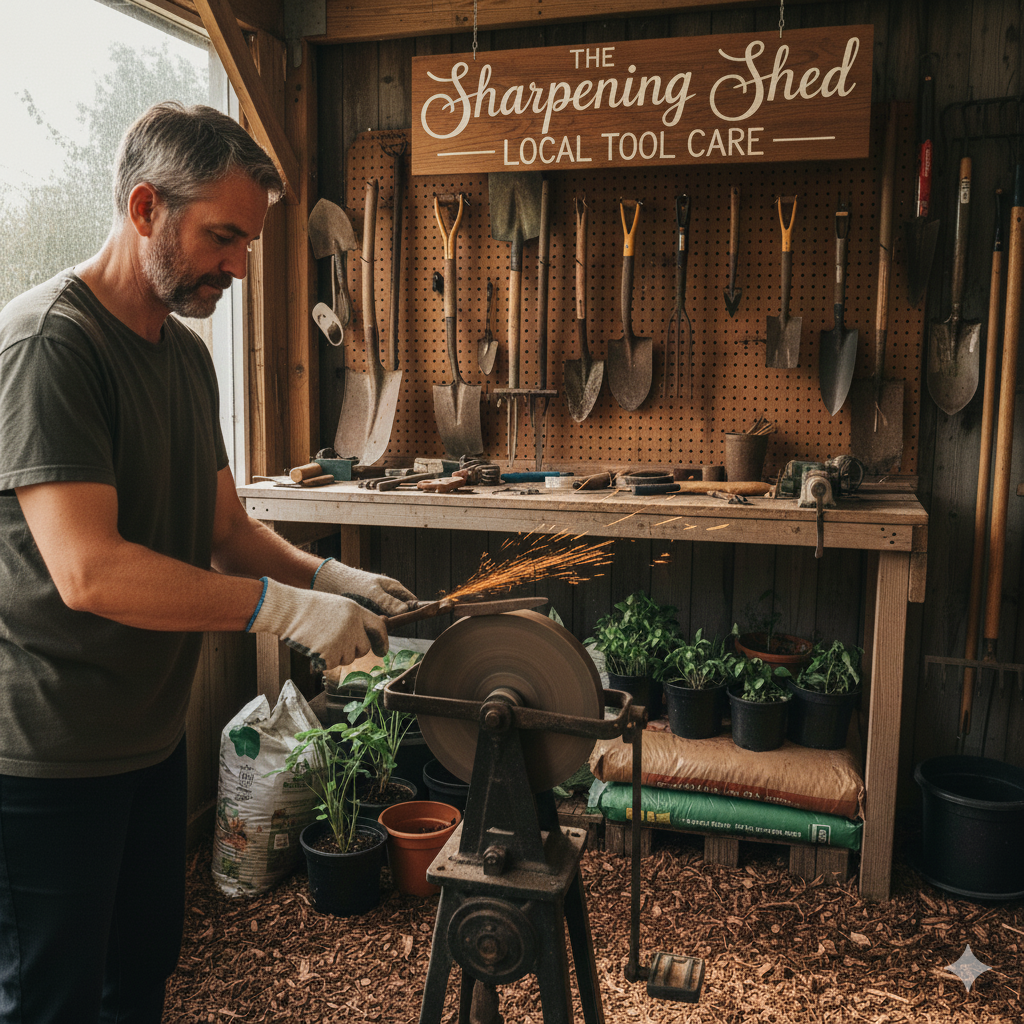
Local hardware stores, garden centers, independent repair shops, dedicated sharpening businesses, mobile sharpeners, and market booth sharpeners all sharpen garden tools. Examples include Ace Hardware (many stores), West Seattle Nursery (drop-off service), and mobile businesses like Roaming Stone. For tool care advice, trusted extension services explain how sharp tools save time and protect plants.
I use hand tools often, and they make my work easier. They help me stay organized, finish faster, and keep full control over every step.
Short intro — what this article gives you
This guide tells you where to sharpen tools.
It shows how to pick the right service.
It lists what to ask and what to expect.
Follow these steps and keep tools work-ready.
Why sharp tools matter
Sharp tools cut cleanly with less force.
They reduce plant damage and speed up work.
Dull blades tear stems and bruise wood.
Extension services recommend regular sharpening for safety and tool life.
Quick reference: who sharpens garden tools near you
-
Local hardware stores (many offer blade sharpening). Ace Hardware
-
Garden centers and nurseries (drop-off sharpening and local pick-up). West Seattle Nursery
-
Independent repair and tool shops (heavy tools, repairs).
-
Dedicated sharpening businesses (full blade restoration). sharper-tools.com
-
Mobile sharpening services (on-site, same-day). roamingstone.net
-
Farmers’ market or event booths (quick, visible work).
Signs your tools need a pro
-
Cuts look ragged or torn.
-
You must use much more force than before.
-
Blade edges show nicks or rounded tips.
-
Tool joints bind or squeak.
-
Mower blades vibrate or leave uneven grass.
Local hardware stores — quick, low-cost option
What they do
-
Sharpen pruners, shears, scissors, and some mower blades. greatlakesace.com+1
Why choose them -
Cheap and nearby.
-
Often same-week turnaround.
-
Good for routine touch-ups.
What to check
-
Confirm they accept your exact tool type.
-
Ask about cleaning and oiling.
-
Check in-store reviews for quality.
Garden centers and nurseries — plant-wise sharpening
What they do
-
Accept pruners, saws, hoes, shovels.
-
Some run regular drop-off and pick-up schedules.
Why choose them
-
Staff know correct edge angles for pruning.
-
They often partner with local sharpeners.
-
Good for hand tools used on live plants.
Tip
-
Call before you drop off to confirm pickup day.
Independent repair shops — best for heavy jobs
What they do
-
Fix bent tools, replace parts, remove heavy rust.
-
Sharpen mower blades, axes, and long-handled tools.
Why choose them
-
Experience with older or specialty tools.
-
Offer repairs plus sharpening.
Expect
-
Longer turnaround for repairs.
-
Higher cost when parts or welding are needed.
Dedicated sharpening shops — professional edge and balance
What they do
-
Restore blades to near-new condition.
-
Balance mower blades and polish edges.
Why choose them
-
Technique and equipment focused only on edges.
-
Longer edge life and cleaner cuts.
Good to ask
-
Do you balance mower blades?
-
Can you remove deep nicks or reset the bevel?
Mobile sharpeners — convenience at your door
How they work
-
You schedule a visit.
-
The sharpener comes with tools and power.
-
You can watch or test blades on site.
When to use mobile service
-
You have many tools.
-
You own heavy or awkward tools.
-
You want same-day service.
What to confirm
-
Whether mower blades must be removed by you.
-
Exact price list for each tool type.
Market booths and pop-up sharpeners
Why they help
-
Quick while you shop.
-
You see the work and can ask questions.
-
Good for small batches like pruners and shears.
Limitations
-
Not ideal for heavy repairs or mower balancing.
What types of tools most services accept
-
Hand pruners and bypass pruners.
-
Loppers and hedge shears.
-
Pruning saws and folding saws.
-
Axes and hatchets.
-
Shovels, hoes, edgers.
-
Lawn mower blades (may need removal).
-
Garden knives, scissors, and shears.
How to find sharpeners near you — step by step
-
Use Google Maps search terms:
-
“garden tool sharpening near me”
-
“mower blade sharpening near me”
-
“mobile tool sharpener”
Check photos and hours.
-
-
Call the shop to confirm tool types and turnaround.
-
Read recent reviews on Google, Yelp, or Facebook.
-
Check local Facebook groups and community boards.
-
Visit farmers’ markets and ask vendors who sharpen tools.
Questions to ask before you drop off or book
-
Do you sharpen this exact tool model?
-
What is the price for this tool?
-
How long will it take?
-
Do you clean and oil tools after sharpening?
-
Will you balance mower blades?
-
Are parts or repairs extra?
What good sharpening work looks like
-
Edge is smooth from heel to tip.
-
No burn marks from overheating.
-
Even grind lines along the bevel.
-
Mower blade is balanced and produces no excess vibration.
-
Hand tools open and close smoothly.
Pricing expectations (general)
-
Hand pruners or shears: low to moderate.
-
Loppers and hedge shears: moderate.
-
Mower blades: moderate, higher if balancing is needed.
-
Axes and heavy tools: moderate to high if reshaping is needed.
Prices vary widely by region and tool condition. Always ask for a quote.
Prep steps before you drop off
-
Clean heavy dirt from blades.
-
Remove excess sap if safe to do.
-
Note broken parts or loose bolts.
-
Wrap sharp edges for safe carry.
-
Label tools if you drop many items.
Aftercare: keep edges sharp longer
-
Oil metal parts after each use.
-
Store tools dry and hung up.
-
Lightly file edges between pro sharpenings.
-
Clean blades and remove sap quickly after use.
Extension guides explain these simple steps.
DIY vs professional sharpening — simple rules
When DIY is fine
-
Light touch-ups on pruners and shears.
-
Small nicks you can file out.
When hire a pro
-
Bent blades or deep nicks.
-
Mower blades that need balancing.
-
Large hedge trimmers or motorized cutters.
-
Heavy rust or broken parts.
Why pros matter
-
They avoid overheating metal.
-
They restore correct bevel and balance.
-
They save you time and reduce risk.
Common mistakes to avoid
-
Sharpening at the wrong angle.
-
Overheating metal with grinders.
-
Leaving filings inside joints.
-
Sharpening only one side of a double-beveled blade.
-
Skipping oiling after sharpening.
Extra services many shops offer
-
Rust removal and chemical treatment.
-
Spring and bolt replacement for pruners.
-
Handle repairs and wood replacement.
-
Tool cleaning and polishing.
-
Mower blade balancing and welding if needed.
Short checklist before you leave the shop
-
Test the tool on a scrap branch or material.
-
Confirm any repairs done match the quote.
-
Ask how long the new edge should last with normal use.
-
Request care tips for this tool type.
Final word — exact answer again
Who sharpens garden tools near you? Local hardware stores, garden centers, independent repair shops, dedicated sharpening shops, mobile sharpeners, and market booths. Call ahead to confirm tool types and services. Use trusted extension advice to maintain newly sharpened tools.
Conclusion
Sharp tools save time, cut cleaner, and help you work with less effort. You can use a local hardware store, a nursery, a repair shop, or a mobile sharpener to get the job done. Each option has its own price and speed, so choose the one that fits your tools and your schedule. Regular sharpening keeps your tools in good shape and helps them last longer.
FAQs
1. How much does garden tool sharpening cost?
Costs change based on tool type and service level. Most shops charge:
-
$5–$10 for small tools like hand pruners
-
$8–$15 for loppers
-
$10–$20 for axes
-
$8–$12 per blade for mower blades
Mobile sharpeners may charge more because they come to you.
2. How often should I sharpen my garden tools?
Sharpen tools:
-
Every 20–25 hours of use
-
At the start of each season
-
Whenever you feel the blade dragging or crushing instead of cutting
Mower blades need sharpening 2–3 times a season.
3. Are mobile sharpening services worth it?
Yes, if you:
-
Have many tools
-
Want someone to come to your home
-
Need fast turnaround
They cost a bit more, but they save time and offer pro-level results.
4. Is DIY sharpening safe for beginners?
It is safe if you use:
-
A flat file
-
A sharpening stone
-
Gloves
-
A vise to hold the tool
DIY sharpening works well for pruners, shovels, hoes, and loppers. For saws and mower blades, a professional is the better choice.