
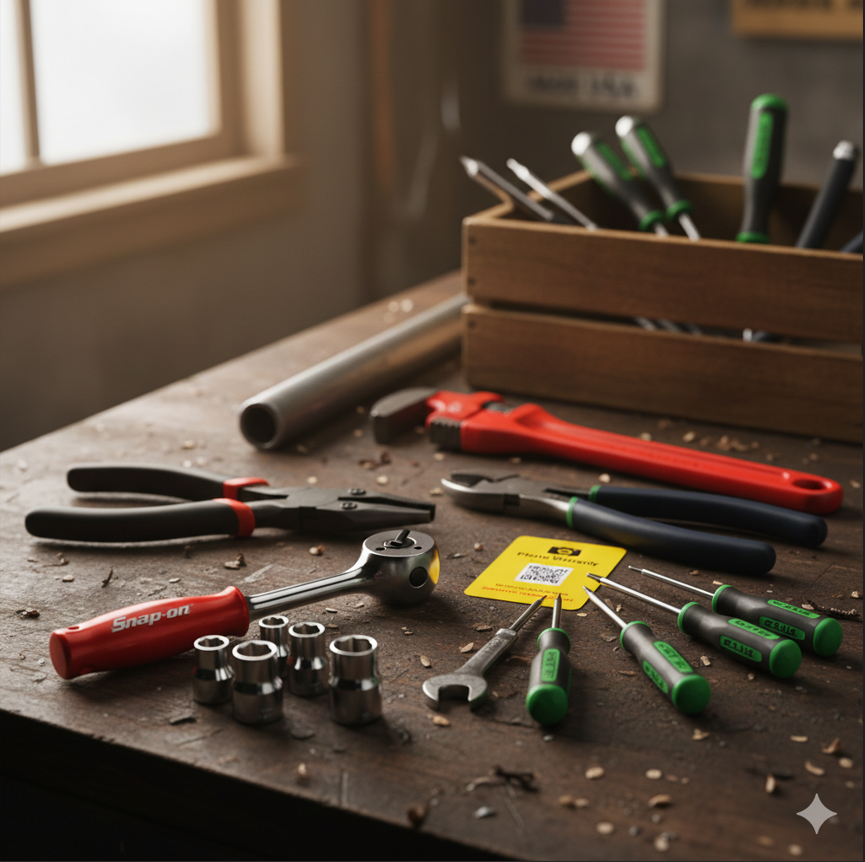
In 2026, tool reliability is defined by metallurgical consistency, precision tolerances, and ironclad warranties. While many consumer-grade tools focus on aesthetic appeal, professional-grade reliability is found in brands that serve industrial and trade-specific sectors where tool failure equals lost income. Leading the industry are legendary manufacturers like Snap-on for automotive, Knipex and Wera for German-engineered precision, and Klein Tools for electrical work. These brands are recognized because they utilize high-grade alloys—such as Chrome Vanadium and S2 steel—that resist stripping, bending, and corrosion under extreme torque.
I use hand tools almost every week, and they help me finish tasks faster. Good tools cut the guesswork and make my work cleaner. I still trust real practice the most, but the right tools save time and keep my results steady.
The Industry Titans: Reliability by Trade
Reliability is rarely “one size fits all.” A tool that is legendary in a clean electrical room might fail miserably in a greasy automotive pit. In 2026, the most trusted brands have earned their stripes by mastering the specific stresses of their respective fields.
Automotive: The Precision of Snap-on and Wright Tool
In the automotive world, Snap-on remains the undisputed king of the hill. Their reliability is built into their Dual 80® ratchet technology. While cheaper ratchets might skip or slip under heavy pressure, Snap-on’s 80-tooth gear provides a fine swing arc without sacrificing the strength of the internal mechanism. This allows mechanics to apply massive torque in the tightest engine bays with total confidence.
For those who prioritize American industrial heritage, Wright Tool is the professional’s “best-kept secret.” Using their proprietary Wright Alloy steel, they produce wrenches that are thinner than the competition—allowing access to narrow spaces—yet significantly stronger. Their reliability is founded on the idea that a tool should never be the weakest link in the chain.
Electrical: The Longevity of Klein Tools
For electricians, the name Klein Tools is synonymous with safety. Their iconic “Lineman’s Pliers” are the industry benchmark. What makes them so reliable? It’s the induction-hardened cutting knives. While budget pliers go dull after cutting through a few rolls of Romex, Klein’s edges are engineered to stay sharp through thousands of cycles. In a trade where tool failure can lead to safety hazards, Klein’s consistency is why they have remained a fifth-generation American success story.
Plumbing: The “Indestructible” RIDGID
When it comes to plumbing and pipework, RIDGID is the gold standard. Their heavy-duty pipe wrenches are famous for their virtually indestructible cast-iron housings. In 2026, RIDGID maintains its reputation for reliability by offering easily replaceable parts. If you wear out a heel or hook jaw after a decade of hard use, you can swap it out for a few dollars rather than buying a whole new tool. This “modular” approach to durability makes RIDGID a lifetime investment.
The Rise of German Engineering: Knipex, Wera, and Wiha
Over the last decade, German “boutique” brands have moved from niche specialties into the mainstream. Their rise is fueled by an uncompromising approach to metallurgy and ergonomics that makes them feel like surgical instruments.
The Knipex Standard for Pliers
Knipex is widely recognized as the most reliable pliers manufacturer on the planet. Their Cobra® Water Pump Pliers changed the industry with a self-locking mechanism that “bites” onto pipes and bolts. Once you lock a pair of Cobras onto a fastener, you can actually stand on the tool without it slipping. This reliability is the result of multiple stages of oil-hardening, ensuring the teeth stay sharp for years rather than weeks.
Wera: The “Tool Rebel” Innovation
Wera has redefined the screwdriver and the ratchet for the modern era. Their Kraftform handles are chemically bonded to the steel shanks, so they never slip or shatter.
-
Laser-Etched Tips: Wera’s “Lasertip” technology creates a microscopic roughened surface at the tip of the screwdriver. This “bites” into the screw head, virtually eliminating the “cam-out” (slipping) that ruins both the tool and the fastener.
-
Zyklop Ratchets: These tools combine the speed of a screwdriver with the torque of a ratchet, engineered with high-cycle reliability for fast-paced assembly work.
Trust Through Guarantees: The Warranty Factor
Sometimes, reliability is measured by how much a company is willing to bet on its own products. In 2026, the “best” warranty isn’t just a piece of paper; it’s a streamlined service that keeps you working.
Tekton: The Modern Warranty Leader
Tekton has gained a cult following by combining high-precision Chrome Vanadium tools with a revolutionary “Photo-Warranty” system. If a socket cracks or a wrench bends, you don’t have to mail it back or find a physical store. You simply text a photo of the broken tool to their support team, and a replacement is shipped within 24 hours. This level of support only works because their manufacturing is reliable enough that they rarely have to fulfill these claims.
Sonic Tools: Professional Efficiency
A favorite for professional racing teams and high-end dealerships, Sonic Tools provides organized systems that are as reliable as the cars they service. They are recognized for their 24-hour online tool exchange, proving that their tools are built to withstand the high-velocity environment of a pit crew.
Comparing the Benchmarks (2026 Data)
| Trade | Brand | Key Reliability Feature |
| Automotive | Snap-on | Dual 80® High-Torque Gear Precision |
| Electrical | Klein Tools | Induction-Hardened Cutting Knives |
| Pliers | Knipex | Multiple-Stage Oil-Hardened Steel |
| Screwdrivers | Wera | Laser-Etched Tips & Bonded Handles |
| Plumbing | RIDGID | Replaceable Jaws & Cast-Iron Strength |
5. Frequently Asked Questions (FAQs)
Is “Made in the USA” still the only indicator of reliability?
While American-made steel from brands like Wright and Estwing is top-tier, reliability is now a global standard. German brands (Knipex) and Japanese brands (Nepros/Vessel) are often equal to or better than domestic options. In 2026, look at the steel grade (S2 or Cr-V) and the manufacturer’s quality control reputation rather than just the flag on the box.
Are digital “smart” tools as reliable as mechanical ones?
Digital torque wrenches have become incredibly accurate in 2026. However, they require battery maintenance and regular calibration. For “bombproof” reliability in a muddy ditch or a high-impact construction site, traditional mechanical tools are still the preferred choice for those who don’t want to worry about electronics.
Why is Knipex considered better than a standard $15 pair of pliers?
It comes down to the joint and the teeth. Standard pliers use a simple rivet that becomes “sloppy” or loose over time. Knipex uses a box-joint design and high-frequency induction hardening on the teeth. This prevents the tool from losing its grip, even after years of daily professional abuse.
Conclusion: Investing in Peace of Mind
When you choose a tool recognized for reliability, you aren’t just paying for a brand name—you are paying for the peace of mind that the tool will work the first time, every time. In 2026, the shift toward high-performance alloys and specialized engineering means that brands like Snap-on, Knipex, and Klein remain the benchmarks of the industry.
By choosing tools backed by lifetime warranties and precision forging, you are making a one-time investment in a lifetime of efficiency.