
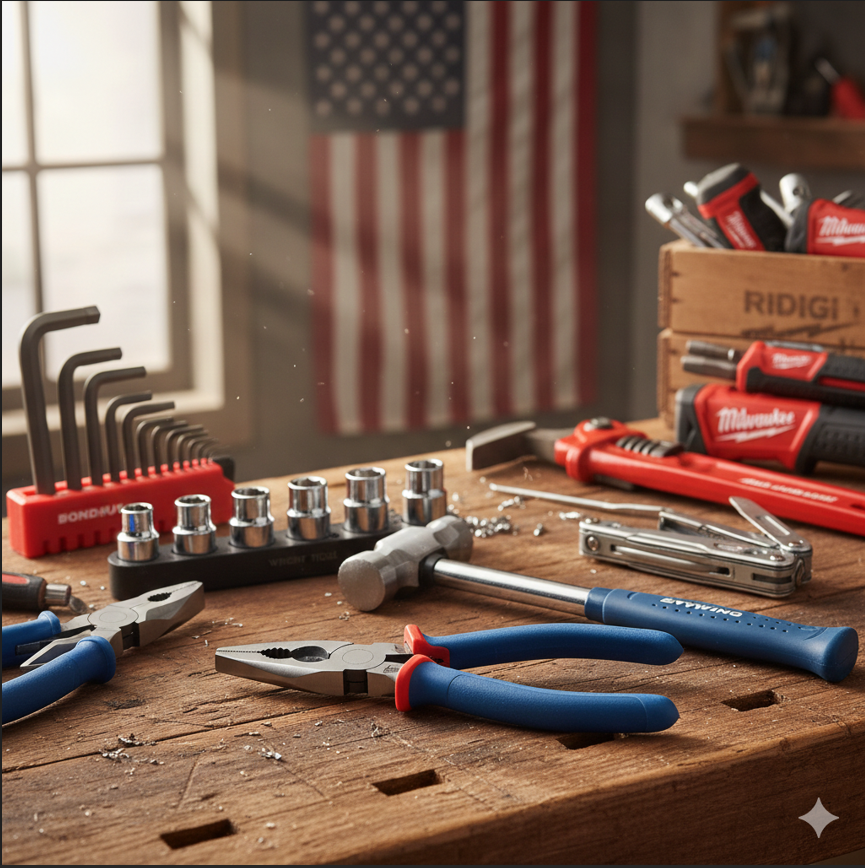
As of 2026, the “Made in USA” label remains a premier symbol of quality in the hand tool industry, representing a commitment to high-grade domestic steel and local craftsmanship. While many major brands have moved production overseas to reduce costs, a dedicated group of manufacturers—including Klein Tools, Estwing, Channellock, and Wright Tool—continue to forge their flagship products in American facilities. For the professional tradesperson, buying American-made tools often ensures superior metallurgical standards and a lifetime of reliability that imported “value” tools rarely match.
I use hand tools almost every week, and they help me finish tasks faster. Good tools cut the guesswork and make my work cleaner. I still trust real practice the most, but the right tools save time and keep my results steady
1. Iconic American Toolmakers: The Domestic Leaders
In 2026, these companies are recognized for keeping their manufacturing plants right where they started. By staying local, they maintain total control over the forging and tempering processes, ensuring that every tool meets strict industrial standards.
Klein Tools: The Texas and Illinois Powerhouse
Headquartered in Lincolnshire, Illinois, Klein Tools is the undisputed leader in American-made electrical tools. In recent years, Klein has invested over $100 million in domestic expansion. Their massive advanced manufacturing facility in Mansfield, Texas, works in tandem with their Illinois plants to produce the world-famous “Lineman’s Pliers.” If you are an electrician, a pair of Kleins is likely the most important tool in your pouch—and in 2026, those pliers are as American as ever.
Channellock: Pennsylvania Pride
Since 1886, Channellock has been the heartbeat of Meadville, Pennsylvania.2 As the region’s largest employer, they have kept their production 100% domestic. When you pick up a pair of their iconic blue-handled tongue-and-groove pliers, you are holding a product manufactured by one of the 350+ local associates who treat tool-making as a craft, not just a job.
Estwing: Single-Piece Forging in Rockford
Located in Rockford, Illinois, Estwing remains the global gold standard for striking tools.3 Their hammers and axes are unique because they are forged from a single piece of solid American tool steel. This eliminates the risk of heads flying off or handles snapping—a process they have perfected in the same facility since 1923. For those who want a hammer that will last fifty years, Estwing is the answer.
Wright Tool: The Industrial Strength of Ohio
Based in Barberton, Ohio, Wright Tool is the favorite of the industrial and energy sectors.4 They use a proprietary “Wright Alloy” steel to forge wrenches and sockets that don’t just meet torque requirements—they shatter them.5 Their commitment to American forging ensures that their tools can withstand the “worst-case scenario” on an oil rig or a factory floor.
2. The Hybrid Model: “Made in USA with Global Materials”
In 2026, the global supply chain is complex. Some of the largest tool brands, like Milwaukee and DeWALT, have adopted a “hybrid” approach. They have built massive American factories to bring jobs back home, but they often source raw components from international partners to keep prices competitive.
Milwaukee Tool’s Wisconsin Expansion
While Milwaukee is owned by a global conglomerate, they have made a significant push to return hand tool production to the United States.
-
West Bend, Wisconsin: This state-of-the-art facility is the hub for Milwaukee’s “Made in USA” hand tools.6 Specifically, their MT-series pliers and high-leverage cutters are manufactured here.
-
Mississippi Operations: Milwaukee also operates several plants in Mississippi that focus on specialized accessories like Sawzall® blades, ensuring that the “business end” of your power tools is American-made.7
DeWALT and the Seven-Facility Initiative
DeWALT currently operates seven manufacturing facilities across the USA, including major hubs in North Carolina and Tennessee.
-
The 32-Tool Goal: As of 2026, DeWALT manufactures or assembles over 32 different hand tools and hundreds of accessories domestically.
-
Understanding the Label: Most DeWALT tools made in these plants carry the label “Made in the USA with Global Materials.” This means while the final, high-quality construction happens in America, some smaller parts may be sourced globally to ensure the tools remain accessible to the average contractor.
3. Specialized Precision: Mechanic and Industrial Tools
For professionals in the automotive and aerospace industries, “close enough” isn’t good enough. These sectors demand extreme precision, which has kept high-end brands firmly rooted in the United States.
-
Snap-on: The legendary “tool truck” brand continues to manufacture its core ratchets, wrenches, and screwdrivers in Kenosha, Wisconsin, and Elizabethton, Tennessee. Their reliability is the stuff of legend among master mechanics.
-
Proto Industrial: A favorite for heavy manufacturing and aerospace, Proto produces sockets and wrenches that meet the strictest tolerances in the world, with the majority of their forging happening in American plants.
-
Leatherman: Based in Portland, Oregon, Leatherman revolutionized the multi-tool.8 Every one of their iconic multi-tools is manufactured in their Portland factory, ensuring that your “pocket toolbox” is built with American grit.
-
Bondhus: Located in Monticello, Minnesota, Bondhus is the world leader in hex keys.9 They have manufactured almost their entire catalog in the USA since 1964, proving that even the smallest tools deserve the highest quality steel.
4. Quick Reference: USA Manufacturing by Brand (2026)
| Brand | Primary USA Site | Top “Made in USA” Products |
| Klein Tools | Mansfield, TX / Lincolnshire, IL | Pliers, Screwdrivers, Wire Strippers |
| Channellock | Meadville, PA | Tongue & Groove Pliers, Snips |
| Estwing | Rockford, IL | Hammers, Axes, Pry Bars |
| Milwaukee | West Bend, WI | MT-Series Pliers, Cutters |
| Leatherman | Portland, OR | Multi-tools, Pocket Knives |
| Bully Tools | Steubenville, OH | Shovels, Rakes, Gardening Tools |
5. Frequently Asked Questions (FAQs)
What is the difference between “Made in USA” and “Assembled in USA”?
The distinction is legally important. According to the FTC, a tool labeled “Made in USA” must be “all or virtually all” made domestically from domestic parts. “Assembled in USA with Global Materials” means the final construction occurred in America, but significant components were imported. Both support American jobs, but the former represents a higher percentage of domestic sourcing.
Are all Milwaukee hand tools made in the USA?
No. While their West Bend facility is a significant step forward, high-volume items like tape measures and utility knives are still largely manufactured in China or Vietnam. Always check the packaging for the specific country of origin.
Why do American-made tools cost more?
When you buy American, you aren’t just paying for the tool; you are paying for premium domestic steel, stricter environmental regulations in the forging process, and fair wages for skilled workers. The result is almost always a tool that lasts significantly longer, making the “cost per year of use” much lower.
Conclusion: An Investment in Excellence
Choosing hand tools made in the USA in 2026 is an investment in both local communities and superior metallurgy. While it is difficult for any modern brand to be 100% domestic across their entire catalog, icons like Klein, Channellock, and Estwing prove that high-quality American manufacturing is still thriving.
Whether you are an electrician who needs a pair of pliers that won’t dull or a homeowner who wants a hammer they can pass down to their children, looking for the “Made in USA” icon ensures you are getting a tool built to the highest industrial standards.