In 2026, watering tools have evolved from simple manual devices into a sophisticated blend of smart technology and ergonomic manual equipment. While the classic watering can and garden hose remain essential for smaller tasks, the modern gold standard for efficiency is drip irrigation and smart-timer systems. These innovations can reduce water waste by up to 90% while ensuring that moisture reaches the root zone precisely where it is needed, preventing the fungal diseases often caused by overhead watering.
I work with many Watering tools for my projects. The right ones take care of the slow parts, like shaping, cutting, and small fixes. They let me focus more on doing the job well instead of spending long hours on small steps.
1. Manual Watering Essentials: The Hands-On Approach
Even in an increasingly automated world, manual watering remains a vital skill. There is a certain “zen” to hand-watering, and for many, it is the best way to inspect plants for pests or nutrient deficiencies. For container gardening and delicate seedlings, these tools are indispensable.
The Evolution of the Watering Can
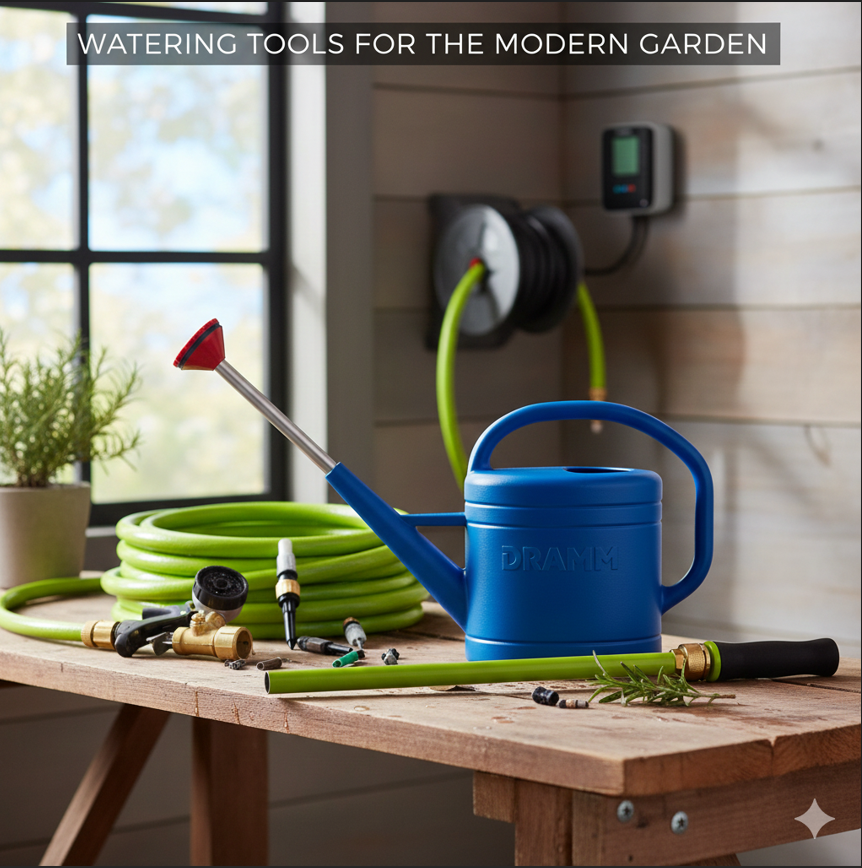
The classic watering can is still a staple, but the 2026 favorites focus on balance and flow. The Dramm 2-Liter remains a top recommendation for both indoor and outdoor use. When shopping for a can, the “rose” (the perforated nozzle) is the most important feature. A high-quality, removable rose allows you to switch between a fine, gentle spray for new seeds—preventing them from being washed away—and a direct spout for deep-soaking established perennials.
Ergonomic Watering Wands
If you have hanging baskets or deep garden beds, a watering wand is your best friend. Modern wands, like the Dramm One-Touch or the Gilmour Swivel Wand, have replaced the old-fashioned squeeze triggers.2 In 2026, the industry has shifted to “one-touch” thumb valves. This allows you to set the water flow with a simple slide of your thumb, drastically reducing hand fatigue during long sessions. The swivel feature is equally important, as it prevents the hose from kinking and fighting against your wrist as you move.
Multi-Pattern Nozzles and Shut-off Valves
A good nozzle should be a multi-tasker. Look for models featuring “Mist” (for humidity-loving ferns), “Shower” (for general garden beds), and “Soaker” (for filling buckets or deep-root watering). A professional tip for 2026: add a high-quality brass shut-off valve to the base of your nozzle. This allows you to stop the flow instantly when moving between garden zones without having to walk all the way back to the spigot.
2. Advanced Hoses and Storage Solutions
The days of wrestling with a heavy, kinked rubber hose that feels like a giant snake are over. Material science has revolutionized the humble garden hose, making it lighter, stronger, and more user-friendly.3
The Rise of Hybrid Hoses
The current top-tier choice for general gardening is the hybrid polymer hose, such as the Flexzilla. These hoses are designed to stay flexible in extreme temperatures—from -40°C to 60°C.4 They have no “memory,” which means they lay flat the moment you pull them out rather than curling into frustrating loops.
For those with limited storage space, expandable hoses have seen a durability “glow-up” in 2026. Older versions were prone to bursting, but modern triple-layer latex cores protected by high-denier fabric sleeves have made them much more reliable.5 They shrink to a fraction of their size, making them perfect for apartment balconies or small patios.
Automatic and Retractable Reels
How you store your hose is just as important as the hose itself. Leaving a hose in the sun leads to UV degradation and creates a tripping hazard. Auto-retractable reels from brands like Hoselink or Gardena have become a standard in modern yards. These wall-mounted units use a spring-loaded mechanism that pulls the hose back in neatly with a gentle tug.6 This keeps the hose protected from the elements and your garden looking professional and tidy.
3. Smart Irrigation: The Efficiency Frontier
If you are looking for a “set it and forget it” solution that prioritizes conservation, smart irrigation is the answer. In 2026, technology allows the garden to “talk” to the water supply.
Drip Irrigation Kits
Drip irrigation is the most efficient watering method known to man. It involves a network of flexible tubing and emitters that deliver water drop-by-drop at the base of each plant.7 This eliminates evaporation and runoff completely. Modern “plug-and-play” kits mean you don’t need a plumbing degree to install them in your vegetable rows or raised beds.8
Smart Timers and Wi-Fi Controllers
Units like the Orbit B-hyve or Rachio 3 have changed the game. These controllers connect to your local Wi-Fi and pull real-time weather data.9 If the forecast predicts rain, the system automatically skips the scheduled watering cycle.10 You can control your entire garden from a smartphone app, ensuring your plants stay hydrated even while you are on vacation.
Soil Moisture Sensors
To take efficiency to the next level, many 2026 gardeners are installing wireless soil moisture probes. These sensors sit in the root zone and communicate directly with the smart timer.11 The system will only trigger if the moisture levels drop below a specific threshold (e.g., 25% volumetric water content). This prevents the “silent killer” of many gardens: overwatering.
4. Choosing the Right Tool for Your Space
Not every tool is right for every garden. Use this table to match your landscape needs with the appropriate equipment.
| Garden Type | Recommended Tool | Why? |
| Potted/Balcony | Watering Can | High precision, manageable weight, no hose needed. |
| Small Flower Beds | Soaker Hose | Delivers deep soaking without getting leaves wet. |
| Large Lawns | Pulsating Sprinkler | Covers massive square footage quickly and evenly. |
| Vegetable Rows | Drip Irrigation | Maximizes crop yield and minimizes weed growth. |
| Hanging Baskets | Telescoping Wand | Reaches high heights without needing a ladder. |
Conclusion: Balancing Convenience and Conservation
Effective watering in 2026 is no longer about how much water you use, but how well you use it. By combining the “soul” of hand-watering with the “brain” of smart technology, you can create a thriving oasis that is both beautiful and environmentally responsible. Whether you prefer the tactile experience of a high-quality Dramm wand or the high-tech ease of a Wi-Fi-controlled drip system, the goal remains the same: consistent, root-level hydration.
Frequently Asked Questions (FAQs)
1. What is the best time of day to water my garden?
The “sweet spot” is early morning, between 5:00 AM and 9:00 AM. This allows plants to hydrate before the sun reaches its peak. It also ensures that any water that accidentally hits the leaves has time to dry, which is the best way to prevent powdery mildew and other fungal issues.
2. Are expandable hoses better than rubber ones?
It depends on the job. Expandable hoses are king for light-duty tasks and easy storage. However, if you are using high-pressure sprinklers or dragging your hose over sharp rocks, a heavy-duty hybrid or rubber hose will be much more durable in the long run.
3. How can I tell if I’m overwatering?
Plants often show the same symptoms for under- and over-watering. Look for yellowing leaves, a “mushy” base on the stems, or the presence of tiny black “fungus gnats.” If the soil feels like a wrung-out sponge two inches below the surface, you are likely overwatering.
4. Can I install a drip irrigation system myself?
Absolutely. In 2026, most kits are designed for DIY installation. They use simple “push-fit” connectors that require no special tools. Most people can set up a small vegetable garden system in under two hours.
5. Do smart watering timers really save that much money?
Yes. By adjusting for rainfall and local humidity, most users see their smart timer pay for itself in water savings within just one to two growing seasons.