
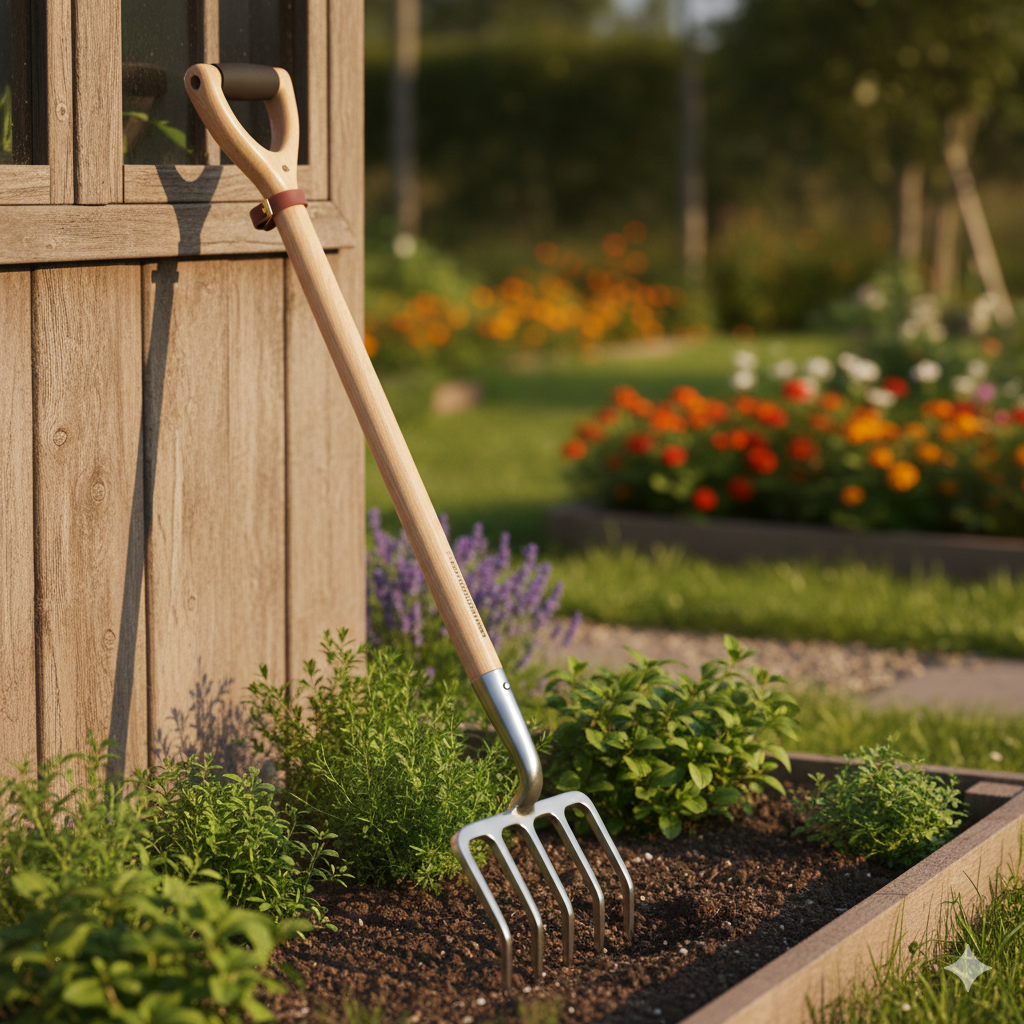
A long-handled garden cultivator is a manual tool with a long shaft and metal tines or a single blade. It loosens surface soil, removes shallow weeds, and mixes amendments while letting you stand upright. Choose tine shape, handle length, and material based on your soil type and your height; for very hard soil use a heavy all-steel model, for tight spaces use a single-blade (CobraHead) style, and for quick surface work choose a rotary/rolling cultivator.
I work with many cultivator tools for my projects. The right ones take care of the slow parts, like shaping, cutting, and small fixes. They let me focus more on doing the job well instead of spending long hours on small steps.
What this tool does and who should buy one
-
Loosens the top few inches of soil.
-
Pulls shallow weeds without uprooting nearby plants.
-
Mixes compost or fertilizer into the top layer.
-
Lets you work standing up to avoid back and knee strain. Iowa State University Digital Press
Who should buy: home gardeners, raised-bed growers, older gardeners, and anyone who wants faster, low-impact bed maintenance.
How the tool is built and why each part matters
Construction
-
Tines or blade: usually carbon or tempered steel for strength. fiskars.com
-
Handle: common materials are hardwood (ash), fiberglass, or steel. Each changes weight, feel, and weather resistance. CobraHead+1
-
Grip: cushioned grips and T-handles improve control and reduce hand fatigue.
Typical length
-
Most long-handled cultivators run roughly 52–60 inches. Choose length to match your height to keep posture upright. CobraHead lists length options (Small, Standard, Tall) to fit gardeners under/over specific heights. CobraHead
Why soil aeration matters (short science, short payoff)
-
Aerated soil has more air-filled pores. Roots need oxygen to breathe and absorb nutrients. Poor aeration reduces root growth and plant vigor. Iowa State University Digital Press+1
-
Gentle surface cultivation improves gas exchange and helps microbes use organic matter. Studies show aeration can raise root respiration and boost yield when done correctly. MDPI+1
Bottom line: light, regular cultivation helps root health and nutrient uptake. Avoid deep, repeated tillage that damages soil structure.
Types of long-handled cultivators and when to pick each
Fixed multi-tine cultivator
-
What: 3–6 tines welded to head.
-
Best for: loose to medium soil, general aeration and weeding around established plants. fiskars.com
Single-blade / hook-style (CobraHead)
-
What: a single, narrow forged blade shaped like a claw.
-
Best for: breaking crusted soil, tight rows, and working close to plant roots without damage. CobraHead’s blade cuts hard soil with less resistance than broader tools. CobraHead+1
Rotary / rolling cultivator (Garden Weasel style)
-
What: rotating spiked wheels or scissor-like blades on a shaft.
-
Best for: fast surface work over larger beds and rows. Garden Weasel models are often ~54.5 inches long and have detachable tines for cleaning. The Home Depot+1
Heavy-duty all-steel cultivator (Fiskars style)
-
What: welded steel head with arrow-tipped tines and foot platform.
-
Best for: breaking compacted or clay soils where extra leverage is needed. The foot platform and arrow tips help penetrate hard ground. fiskars.com+1
Lightweight / long-reach models
-
What: lighter heads, slim tines, longer shafts.
-
Best for: raised beds and gardeners who prefer less weight.
Exact features to inspect before you buy (actionable checklist)
-
Handle length: pick a length so your back stays straight when you work. (Short users: shorter handle; tall users: 56–60″+). CobraHead
-
Handle material: hardwood feels natural; fiberglass resists weather and reduces shock; steel is toughest but heavier. fiskars.com
-
Tine/blade material: carbon or tempered steel holds an edge and resists bending. Stainless steel resists rust but costs more. fiskars.com
-
Grip style: cushioned or T-handle increases control and comfort.
-
Weight & balance: a balanced tool moves easily. If you tire fast, choose lighter or better-balanced models.
-
Special features: detachable tines (easy clean), foot platform (extra leverage), replaceable parts.
Short expert reviews — what each popular model truly does
Expert Gardener Long Handle 4-Tine Cultivator
-
What it offers: carbon steel head with four tines, fiberglass handle (about 55.5 inches). Comfortable grip. Good for general home beds. linkedin.com+1
CobraHead Long Handle Weeder & Cultivator
-
Why gardeners like it: narrow, tempered steel “finger” that slices crust and weeds while protecting nearby roots. Comes in lengths for different heights. Use a sweeping, sideways motion. CobraHead+1
Garden Weasel 54.5 in. Rotary Cultivator
-
Why it works: rotary wheels give a scissor action that breaks surface crust and weeds. Detachable tines and self-cleaning action make it low maintenance. Good for quick passes across beds. The Home Depot+1
Fiskars All-Steel Fixed 6-Tine Cultivator
-
Why it stands out: heavy welded steel, arrow-tipped tines, and foot platform for extra force. Use this for compacted or clay soils where light tools stall. fiskars.com+1
Which tool fits which soil — a simple match chart
-
Soft, sandy soil: rotary or multi-tine; low effort. The Home Depot
-
Loam, garden beds: multi-tine or CobraHead for precision. CobraHead
-
Hard, compacted or clay soil: heavy all-steel with arrow tines and foot platform. fiskars.com
-
Rocky or root-filled ground: single-blade models that slice and pull around obstacles. CobraHead
-
Raised beds / shallow beds: lightweight long-reach models. Ubuy Bangladesh
Step-by-step: how to use a long-handled cultivator (practical technique)
-
Check soil moisture. Work when soil is slightly moist, not waterlogged. Overly wet soil compacts. Natural Resources Conservation Service
-
Clear big debris. Remove stones or large roots first.
-
Loosen surface: use short, shallow sweeps (1–2 inches deep). Avoid deep repeated passes. fiskars.com
-
Weed: angle blade/tines under weed crown and lift. For narrow rows, use a sweeping action. CobraHead
-
Mix amendments: scatter compost and then make a zigzag sweep to blend into topsoil.
-
Clean and store: knock soil off, dry, oil metal lightly, and hang indoors if possible. fiskars.com
Common mistakes and how to avoid them
-
Tilling wet soil: causes compaction. Wait until soil is crumbly. Natural Resources Conservation Service
-
Using too much force: the right tool and technique beat brute force. Let tool design do the work.
-
Overcultivating: repeated deep cultivation harms soil structure and microbes. Use shallow passes. Natural Resources Conservation Service
-
Wrong handle length: buy to fit your height or use an adjustable model. doitbest.com
Maintenance — keep the tool working for years
-
Clean soil from tines after each use to slow rust.
-
Sharpen or file edges on single-blade tools when dull.
-
Oil metal parts lightly before winter storage.
-
Treat wooden handles with linseed oil to prevent splitting.
-
Replace worn parts when available; detachable heads extend tool life. fiskars.com
Careful alternatives — when not to use a long-handled cultivator
-
For deep tilling or new ground with heavy roots, use a broadfork, spade, or mechanical tiller. Long-handled cultivators are for surface work. Natural Resources Conservation Service
-
For lawn core aeration, use a core aerator not a cultivato
Q: How deep does a cultivator work?
A: Typically 1–3 inches for weeding and aeration. Deeper work needs a different tool. fiskars.com
Q: Can cultivators harm plant roots?
A: If used too close or too deep, yes. Use narrow or single-blade tools near delicate roots. CobraHead
Q: How often should I cultivate?
A: Light passes as needed—after rain crusting or every few weeks during growing season. Do not overdo it.