
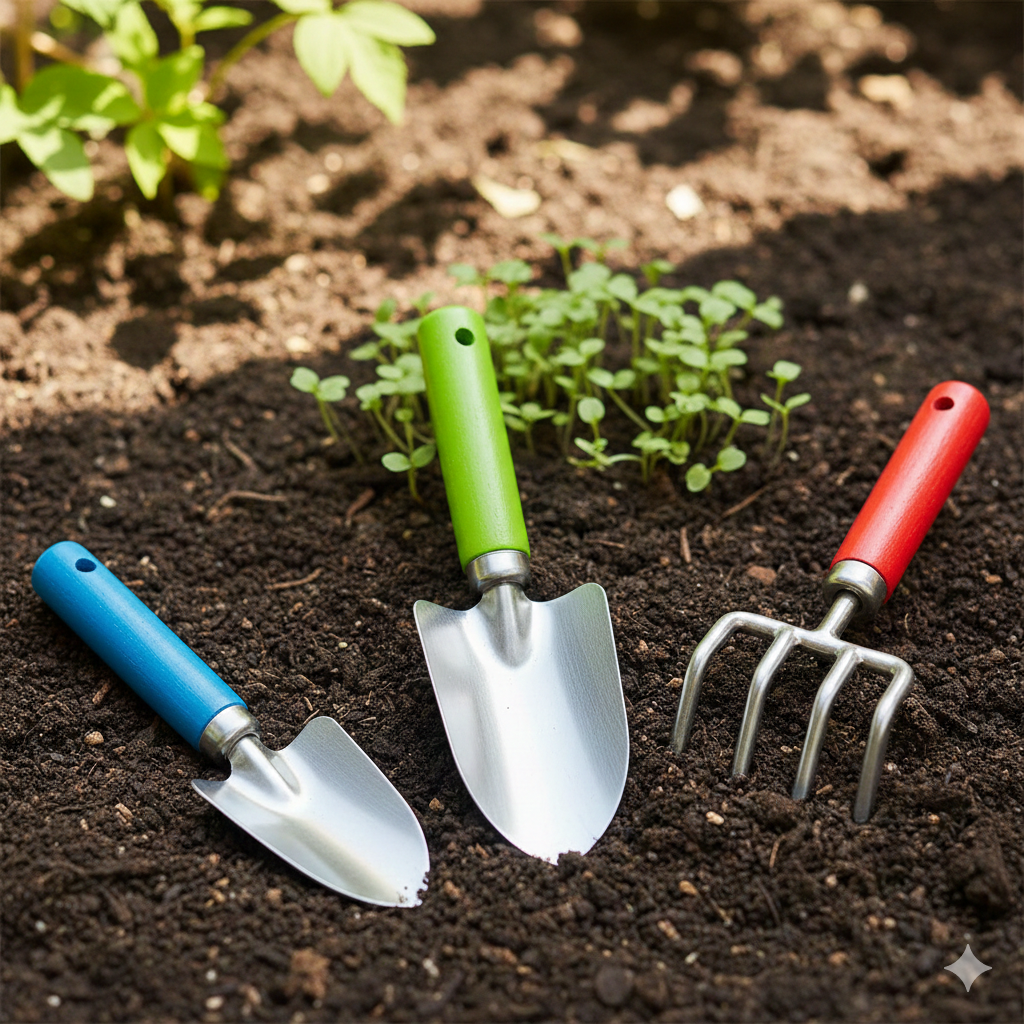
Kids should use real metal tools with stainless steel heads and wood handles sized for small hands. The best options are Kent & Stowe, Spear & Jackson Tiny Traditions, and G & F JustForKids because they last long, stay safe, and work well in soil.
I work with many Kids garden tools for my projects. The right ones take care of the slow parts, like shaping, cutting, and small fixes. They let me focus more on doing the job well instead of spending long hours on small steps.
Quick promise: what you will get from this guide
-
Clear reasons to choose metal over plastic.
-
Exact product strengths and when to buy them. Kent & Stowe+1
-
Safety rules parents can teach fast.
-
Simple care steps to make tools last.
2. Why choose metal tools for kids (short logic)
-
Durability: Metal keeps shape under real work. Stainless steel resists rust.
-
Function: Metal cuts soil and lifts roots. Plastic often bends or clogs.
-
Learning: Real tools let kids do real tasks with skill.
-
Value: Metal tools last years and can pass to younger siblings.
3. Key material notes: what to prefer and why
-
Stainless steel heads — best for rust resistance and low soil stick. Works well in humid places.
-
Coated steel — cheaper, but coating can chip over time.
-
Solid wood handles (ash or hardwood) — strong, light, and comfortable. Oil the wood once a season. Kent & Stowe
-
One-piece shafts (no loose joints) — last longer and stay safe. spear-and-jackson.com
4. Size, weight, and balance — how to match tools to hands
-
Handle length: 20–30 cm hand tools work for ages 4–7. Longer handles suit older kids. Kent & Stowe
-
Head size: Small, narrow heads dig without overwhelming the child.
-
Weight: Tool should feel light in the child’s dominant hand. Avoid tools over-heavy for long tasks.
-
Balance: Good balance reduces wrist strain and helps control.
5. Safety features to demand
-
Rounded tips and edges to avoid cuts. Kent & Stowe
-
No sharp seams where skin can rub.
-
Secure handle-to-head join — no wobble. spear-and-jackson.com
-
Grip texture or slight taper to prevent slipping.
-
Teach carrying with head down and storing in a safe place.
6. Product deep dives (exact facts + best uses)
Kent & Stowe Kid’s Stainless Steel Digging Spade and Fork
-
Material: Stainless steel heads, ash wood handles. Kent & Stowe
-
Design: Scaled-down adult tools. Rounded tips for safety.
-
Best for: Raised beds, small trenches, planting bulbs.
-
Why pick it: Good mix of real tool feel and child-fit size. Long life in humid gardens. Kent & Stowe
Spear & Jackson Tiny Traditions Children’s Fork
-
Material: Mirror-polished stainless steel head, one-piece hardwood shaft.
-
Guarantee: Manufacturer lists a 10-year guarantee for the Traditional stainless line.
Best for: Turning compost, loosening soil, working around roots.
-
Why pick it: Strong build and balance that handles heavier work for older kids.
G & F Products — JustForKids Tool Set
-
Material: Sturdy steel heads and real wood handles (4-piece sets common).
Contents: Small spade, rake, hoe, leaf rake in many sets. -
Best for: Yard cleanup, light digging, learning different tasks.
-
Why pick it: Affordable and functional alternative to cheap plastic toys. Good starter set for ages 5+.
7. Side-by-side quick comparison (practical view)
-
Best for toddlers (3–4): Short, rounded-edge hand tools. Kent & Stowe hand trowel works well.
-
Best for 5–7 years: Small metal sets like G & F JustForKids.
Best for 8–12 years: Spear & Jackson Tiny Traditions or full-size junior forks. -
Best for humid climates: Stainless-steel heads (less rust).
8. Practical tasks kids can do with spade and fork
-
Dig small holes for bulbs or seedlings.
-
Turn the top 5–10 cm of soil in a raised bed.
-
Lift weeds and roots gently.
-
Move compost into a mixing tray.
-
Rake light debris and level soil.
9. Safety checklist for parents (short, exact rules)
-
Teach proper grip and stance.
-
Use gloves until kids build callus resistance.
-
Limit digging in hard clay until child grows stronger.
-
Stop if tool slips or the child struggles.
-
Store tools off the ground and out of reach.
10. Tool care made simple (3 steps)
-
After use: Brush off soil and wipe dry.
-
Once a month: Oil wooden handles with light oil. Wipe metal with oil if rust starts.
-
Storage: Hang indoors or keep in a dry box. Do not leave tools in rain.
11. Buying logic: what to check before checkout
-
Confirm stainless steel head if you need rust resistance.
-
Check handle join; avoid models with visible gaps.
Compare length and weight with child’s height and strength.
Read recent user reviews for breakage issues. (Many products list reviews on retail pages.)
12. Why gardening matters for kids — quick evidence
-
Gardening helps physical activity and healthier eating. Children’s Health Scotland
-
Studies link gardening to better mood and focus. Recent reviews highlight mental health gains. AP News
-
School and family gardens improve social and learning outcomes. Children & Nature Network
Conclusion
Kids enjoy gardening more when they use real metal tools that fit their hands. A sturdy spade and fork help them dig, lift soil, and learn simple garden tasks with ease. Parents get long use from these tools because they hold up well in heat, rain, and daily work. If you want a safe and strong set for young gardeners, metal kids’ tools are the best pick.
Quick Short FAQs
Q: Can toddlers use metal tools?
-
Yes, if the tools are small, rounded, and used with an adult.
Q: Should kids use full-size adult tools?
-
No. Use kid-sized or junior-sized tools.
Q: Are stainless tools better than coated steel?
-
Yes. Stainless lasts longer and handles moisture better.
Q: What age is right for a fork?
-
Ages 5–12, depending on the size.