
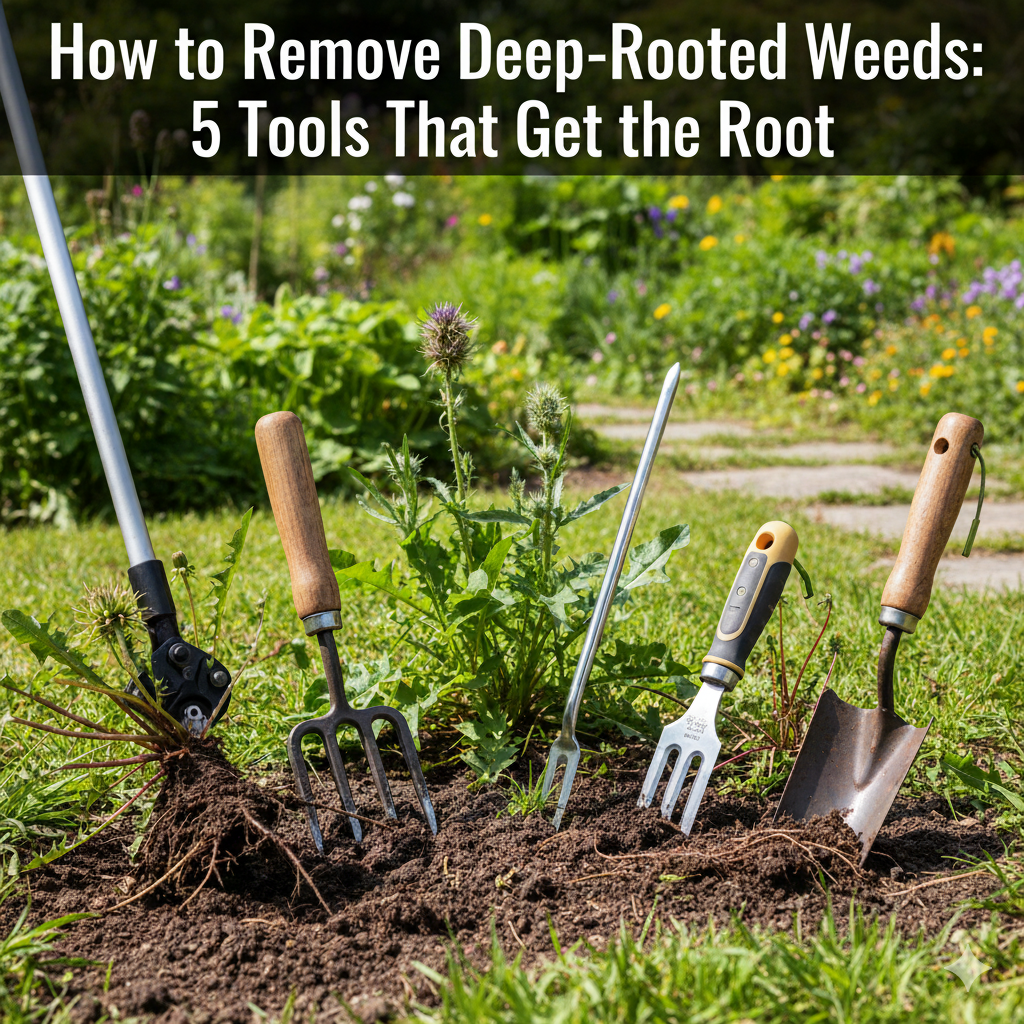
To remove deep-rooted weeds well and stop them from growing back, use the right tool for the soil, the weed, and the space you are working in — and work when the soil is moist. The right tool, used with steady steps and good timing, helps you pull out the whole root instead of only the top.
I use hand tools often, and they make my work easier. They help me stay organized, finish faster, and keep full control over every step.
Why deep roots matter
-
Deep-rooted weeds often survive when only the top or part of the root is removed.
-
Any leftover root fragments can sprout new weed growth.
-
Dry or compacted soil holds roots tightly, making full removal difficult.
-
Working in moist soil loosens the hold around roots, increasing the chance of removing them completely.
This logic shows why tool choice and soil condition are critical for success.
Best timing and soil preparation
When to pull weeds:
-
After a good rain.
-
After watering the soil thoroughly.
-
Early morning or late evening when soil retains moisture longer.
Preparation steps before pulling:
-
If soil is dry, water your garden area and wait 15–30 minutes to let moisture soak in.
-
Clear the surface — remove mulch, loose debris, or plants that block access.
-
Gently press the soil around target weeds to test softness. If it resists, wait or water again.
Working in moist soil reduces the risk of root snapping and increases the chance of extracting the whole root.
What to check before selecting a tool
Before grabbing a tool, assess these factors:
-
Soil type — Is it clay, sandy, or loamy?
-
Weed type — Taproot (like dandelion), woody root, shallow root, or long thin root.
-
Space — Is the area a wide lawn, a tight flower bed, or between plants?
-
How you want to work — Standing, kneeling, or bending.
-
Age and size of weed — Young weed with short root or old weed with a long root system.
Matching tool to these conditions helps avoid wasted effort and ensures proper root removal.
The 5 Best Tools and How to Use Them
Each tool below explains why it works, when it works best, how to use it, and common mistakes to avoid.
1. Stand-up weed puller — ideal for lawns and taproots
Why it works:
-
Long handle allows work without bending.
-
Claw or pronged head grips the root crown and pulls straight up.
When to use:
-
On lawns or soft soil.
-
For weeds with a straight taproot (for example dandelion) or shallow root systems.
Steps to use:
-
Position the prongs around the weed base.
-
Press the tool into the soil until prongs surround the root.
-
Engage the grip/claw mechanism (step down or press handle, depending on tool).
-
Pull straight up steadily.
-
If root resists, twist gently while pulling.
Common mistakes to avoid:
-
Using the tool in dry, hard soil (root will snap).
-
Pulling too fast or at an angle (may break root).
2. Long-handled digging fork — best for compacted soil and old roots
Why it works:
-
Tines loosen soil around the root rather than slicing it.
-
Allows lifting without cutting the root, minimizing root fragmentation.
When to use:
-
On clay or compacted soil.
-
For old weeds with thick or woody roots (e.g. dock, thistle).
Steps to use:
-
Insert the tines beside the weed root (not directly over it).
-
Press down and rock the fork gently back and forth to loosen soil.
-
Work deeper in stages for long roots.
-
Lift the root using the fork and your hands once soil is sufficiently loosened.
Common mistakes to avoid:
-
Driving tines directly onto the root crown (can slice root).
-
Pulling when soil is still firm (causes root breakage).
3. Hori hori knife — useful for tight spaces and precise removal
Why it works:
-
Narrow, strong blade can dig narrow holes and cut side roots cleanly.
-
Serrated edge helps cut through fibrous roots.
When to use:
-
In flower beds or between plants where larger tools won’t fit.
-
For small to mid-size weeds such as dandelion, plantain, and other taproot weeds.
Steps to use:
-
Insert the tip beside the root crown at a shallow angle.
-
Push blade down to the desired depth (some models show depth markings).
-
Use the serrated edge to cut anchor roots gently.
-
Wiggle and lift soil beside the root.
-
Pull out the plant by hand or using the knife tip.
Common mistakes to avoid:
-
Forcing blade in hard, dry soil (blade dulls or bends).
-
Pulling sideways — always lift straight up.
4. Corkscrew weeder — strong for long taproots with minimal soil mess
Why it works:
-
Spiral shaft twists into soil and wraps around the root.
-
Provides strong grip on the root, allowing a clean pull out without extra digging.
When to use:
-
In damp clay or loamy soil.
-
For long taproots and weeds that resist straight pulling (for example thick weeds or thistle).
Steps to use:
-
Place the tip next to the weed’s base.
-
Turn clockwise, pushing spiral into the soil.
-
Continue twisting until spiral grips the root deeply.
-
Pull up slowly while holding the handle.
-
If needed, twist a little more during lift for better grip.
Common mistakes to avoid:
-
Twisting too shallow — root remains deep and will regrow.
-
Pulling at an angle — pull straight up.
5. Hoe (half-moon or goose-neck) — useful for early weeds and open beds
Why it works:
-
Blade edge slices below the soil surface to sever root from crown or loosen weeds shallowly.
-
Corner of hoe can dig and pry roots up when pressed under crown.
When to use:
-
In loose soil or early weed growth.
-
In wide beds or along rows where you need to work fast across many weeds.
Steps to use:
-
Use blade edge to slice just under root crown.
-
For deeper roots, insert the corner beneath crown, press down, then lift slowly to pull root.
-
Remove weed remains and repeat across area.
Common mistakes to avoid:
-
Cutting too shallow (root remains).
-
Chopping with force — use steady slicing motion.
Additional Tools for Special Cases
When standard tools don’t work, these may help:
-
Root-cutter trowel — narrow blade reaches between plants and under soil for deep root access.
-
Weeding sickle — cuts dense surface weeds or weeds with many small roots.
-
Soil probe — checks root depth before digging.
-
Small lever bar — helps lift old woody roots in very hard soil.
These tools are useful when space is tight or soil is hard.
Choosing Tools Based on Soil Type
| Soil Type | Recommended Tools | Reason |
|---|---|---|
| Clay (compact) | Long-handled digging fork, corkscrew weeder | Soil loosens slowly; need tool to break soil around root without slicing root. |
| Sandy | Stand-up weed puller, hori hori knife | Sandy soil gives easily, but roots may break if pulled too fast. |
| Loam (balanced) | Most tools will work | Soil gives a bit and grips less — focus on correct technique. |
If soil is hard or dry, water first and wait. Moist soil reduces root breakage.
Matching Tool to Weed Type
-
Taproot weeds (e.g. dandelion): use stand-up puller or hori hori knife.
-
Thick woody roots (e.g. dock, old thistle): use digging fork or corkscrew weeder.
-
Shallow-root weeds or seedlings: hoe works fine.
-
Mixed small weeds among plants: hori hori knife or narrow root trowel works best.
Matching tool to weed type increases success and reduces time.
Steps to Remove Weeds Without Breaking Roots
-
Water soil if dry; wait 15–30 min for moisture to penetrate.
-
Choose tool based on soil, weed type, and space.
-
Place tool beside root crown, not directly above it.
-
Use steady, even force — avoid jerky moves.
-
Rock, twist, or lever before pulling.
-
Pull straight up, checking root length.
-
Refill the hole and press down soil.
-
Add compost or mulch to block light.
This method helps avoid root snapping and reduces regrowth chance.
Steps to Prevent Weed Regrowth
-
Remove the entire root including the crown.
-
Backfill hole with fresh soil or compost — this helps prevent root fragments from re-establishing.
-
Add a 2–3 inch layer of mulch. Mulch blocks sunlight and suppresses weed seed germination.
-
Mark the spot and inspect again after 7–10 days. Pull any new shoots early before roots deepen.
These practices reduce the seed bank and limit future weed growth.
Tool Maintenance & Safety
-
Always wear gloves when handling sharp tools or weeds with thorns.
-
Clean soil off tools after each use; dry them before storage to prevent rust.
-
Sharpen blades and edges when they dull — a sharp tool makes cleaner cuts and reduces root breakage.
-
Store tools off the ground — hang them or store in a dry shed.
-
Use correct posture: bend knees, not the back; avoid over-twisting.
Well-maintained tools and safe handling improve results and prolong tool life.
Common Mistakes and How to Avoid Them
-
Pulling weeds in dry soil: always water first.
-
Using wrong tool for soil type: pick fork or corkscrew for clay; puller or knife for loam or sand.
-
Chopping roots instead of lifting: slice beneath root and lift — don’t chop in place.
-
Working too fast or roughly: steady, deliberate motion ensures cleaner root removal.
Avoiding these mistakes will save time and cut down on repeat weed growth.
Quick Tool Buying Advice
When buying garden tools:
-
Choose forged steel or durable stainless metal — it withstands tough soil.
-
Prefer ergonomic handles and long shafts if you work standing.
-
For knives (like hori hori), pick models with depth markings.
-
Avoid very cheap tools that bend or break in clay soils.
Spending a little more on quality ensures better performance and fewer broken roots.
Sample Weeding Session — Practical Plan
-
Inspect garden area and identify weeds.
-
Water dry spots; wait 15–30 minutes.
-
Choose tool based on soil and weed type.
-
Use correct technique (see tool instructions).
-
Check root after pulling to ensure full removal.
-
Fill the hole with compost or soil; press down.
-
Add mulch if area allows.
-
Mark or note the spot; re-check after 7–10 days for new shoots.
Using this plan consistently reduces weed recurrence and makes future weeding easier.
Summary of Key Points
-
Deep roots regrow if not removed fully.
-
Moist soil and right tool are keys to success.
-
Match tool with soil type, weed type, and garden layout.
-
Use careful, steady technique — avoid forceful jerks or chop-and-drop methods.
-
Aftercare (compost, mulch, check-ups) helps prevent regrowth.
-
Maintain tools and use proper safety practices.
With the right approach, pulling deep-rooted weeds becomes manageable, less time-consuming, and rarely requires repetition.
Conclusion
Pulling deep-rooted weeds needs the right tool, careful steps, and wet soil. Choosing the correct tool for the soil, the weed, and your garden makes pulling weeds easier and more effective.Working slowly and making sure you remove the whole root stops weeds from growing back.Looking after the garden after pulling, like filling holes and putting down mulch, keeps it clean and stops weeds from growing back.