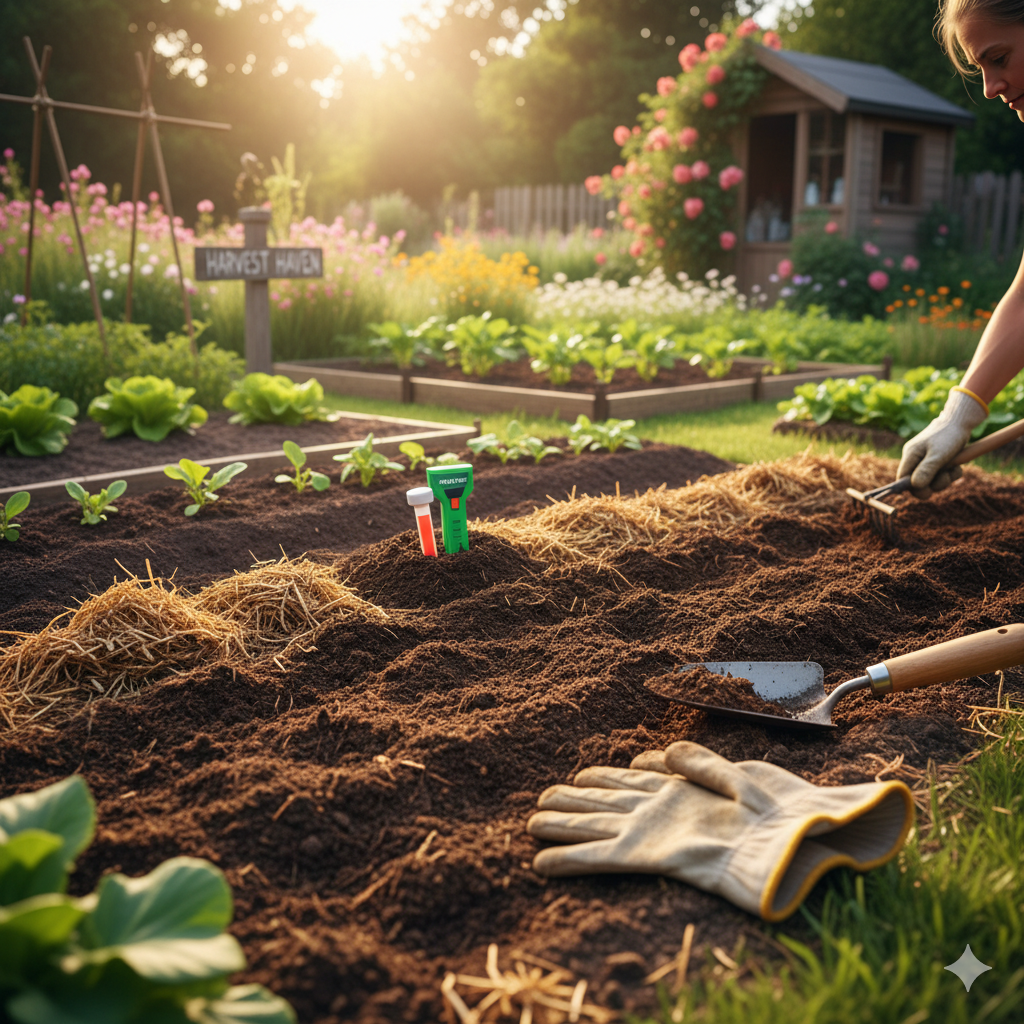
Preparing garden soil is key to healthy plant growth. Good soil provides essential nutrients, water, and drainage for thriving plants. Follow this step-by-step guide to prepare your garden soil and ensure successful planting
Understanding Your Garden Soil
Understanding your soil type is the first step to successful planting. Soil texture and structure vary by location and directly impact plant growth.
Types of Soil
There are three main types of soil:
-
Clay Soil: This type of soil is sticky and heavy. It holds water but drains poorly, which can cause root rot. It can be hard to work with, but it is nutrient-rich.
-
Sandy Soil: Sandy soil has larger particles and drains quickly. However, it doesn’t hold nutrients well, which means plants may not get enough food.
-
Loamy Soil: Loam is the best type of soil for most plants. It is a mix of sand, clay, and silt, and it provides good drainage while retaining enough moisture. Loamy soil is easy to work with and is rich in nutrients.
Testing Your Soil
To know the exact condition of your soil, it’s a good idea to perform a simple test. You can buy a soil testing kit at a garden center, or you can send a sample to a local lab. Testing your soil will show if it has the right pH and nutrient levels. Most plants prefer soil that is slightly acidic to neutral (pH of 6 to 7).
If your soil test shows that the pH is too high (alkaline) or too low (acidic), you can adjust it. To raise the pH (make it less acidic), add lime. To lower the pH (make it more acidic), you can add sulfur.
Improving Soil Drainage
Good drainage is essential for healthy plants. If your soil is too heavy (like clay soil), it may not drain well, and water can build up around plant roots. On the other hand, sandy soil drains too quickly and doesn’t retain enough moisture.
You can improve soil drainage by adding organic matter like compost, leaves, or straw. Organic matter helps break up heavy soils and improves water retention in sandy soils. It also adds essential nutrients to the soil.
Cleaning Your Garden Area
Once you know the type of soil you have and its quality, it’s time to clean up the garden area. This will make it easier to prepare the soil for planting.
Remove Weeds
Weeds are one of the biggest problems in gardens. They compete with your plants for nutrients, water, and space. Start by pulling out any weeds in the soil. If the weeds have deep roots, use a garden fork or hoe to remove them.
If you have a lot of weeds, consider using mulch after planting to prevent them from coming back. Mulch can be made from grass clippings, leaves, or straw, and it will keep the soil moist and weed-free.
Remove Rocks and Debris
After dealing with weeds, remove any rocks, sticks, or other debris in the soil. Rocks can make it hard for plant roots to grow, and they can also be dangerous for your garden tools. Use a rake to clear the area, and if you find any large stones, remove them by hand.
Aerate the Soil
Soil that is compacted (when the particles are pressed tightly together) can make it difficult for plants to grow. To solve this, you should aerate the soil. Aerating means loosening up the soil to allow air, water, and nutrients to reach the plant roots more easily.
You can aerate the soil using a garden fork, a spade, or a mechanical aerator. Gently poke holes in the soil, but be careful not to go too deep. Aim for about 2 to 3 inches deep, especially if you have shallow roots or smaller plants.
Adding Organic Matter and Fertilizers
Now that your soil is clean and aerated, it’s time to add organic matter and fertilizers. This will improve the soil’s fertility and help your plants grow strong and healthy.
Adding Compost
Compost is one of the best things you can add to your soil. It is made from decayed plants, food scraps, and other organic materials. Compost is full of nutrients that plants need, and it also improves soil texture.
To add compost, spread a layer about 2 to 3 inches thick over the garden bed. Then, use a shovel or garden fork to mix it into the top few inches of soil. This will improve soil structure, water retention, and nutrient levels.
Fertilizers
In addition to compost, you might want to add a balanced fertilizer to your soil. Fertilizers provide essential nutrients like nitrogen, phosphorus, and potassium, which plants need to grow. You can choose between organic fertilizers (like manure or fish emulsion) or synthetic fertilizers (like chemical-based options).
When applying fertilizer, follow the instructions on the label carefully. Too much fertilizer can harm plants, so be sure not to overdo it.
Mulching
Once you’ve added compost and fertilizer, it’s time to add mulch. Mulch helps retain moisture, prevent weeds, and keep the soil temperature stable. Organic mulches like straw, grass clippings, or wood chips are best because they break down over time and improve the soil.
Spread the mulch evenly over the soil, but don’t pile it too high around the plant stems. A 2 to 3-inch layer is ideal. Mulch also helps protect plants during extreme weather, keeping their roots cool in summer and warm in winter.
Final Steps and Conclusion
With your soil prepared, you are now ready to plant your garden. However, there are a few final things to keep in mind.
Watering
After preparing your soil, it’s important to water it well before planting. This helps settle the soil and ensures that your plants have enough moisture to get started. Use a gentle watering method like a garden hose or watering can to avoid disturbing the soil too much.
Planting Your Seeds or Plants
Now it’s time to plant! Follow the instructions on your seed packets or plant tags for planting depth and spacing. Be sure to plant your seeds or plants at the right depth to allow for proper root growth.
When planting, make small holes in the soil using your fingers, a stick, or a garden tool. Place the seeds or plants in the holes, and then cover them with soil. Water again after planting to help the roots settle.
Preparing your garden soil for planting is an important step in creating a thriving garden. By understanding your soil, cleaning up the garden area, adding organic matter, and fertilizing, you’re setting your plants up for success. Taking the time to prepare your soil properly will lead to healthier, stronger plants and a more beautiful garden. Happy gardening!
FAQs
1. How often should I add compost to my garden soil?
Compost should be added to your garden once or twice a year. Adding it in the spring or fall is ideal. It helps improve soil structure and provides nutrients for the plants.
2. What can I do if my soil is too sandy?
If you have sandy soil, you can improve it by adding organic matter like compost or well-rotted manure. This will help improve water retention and provide nutrients for your plants.
3. How do I know if my soil is ready for planting?
The soil should be moist but not soggy. You can test this by grabbing a handful of soil and squeezing it. If it falls apart, it’s too dry. If water drips out, it’s too wet. Ideal soil should hold together in a loose clump.
4. Can I use store-bought fertilizers instead of compost?
Yes, store-bought fertilizers can be used, but organic compost is often better for long-term soil health. Fertilizers provide immediate nutrients, while compost improves soil structure and adds nutrients over time.