Soil preparation is key to healthy crops and a successful harvest. Without proper preparation, plants may struggle to grow and face issues like pests and diseases. The right farming tools make soil preparation easier and more effective. In this post, we’ll explore the best tools for preparing your soil, ensuring your crops grow strong and healthy.
Why Soil Preparation is Important
Soil preparation is key to healthy plant growth. Plants rely on soil for nutrients, water, and air. Without proper preparation, plants may struggle to get these essentials, leading to poor growth. Soil prep involves loosening the soil, adding nutrients, and ensuring the right texture and structure.
Proper soil preparation helps:
-
Improve Soil Structure: Soil can become compacted over time. This makes it difficult for plant roots to grow and absorb nutrients. Tools like plows or tillers help loosen the soil, making it easier for plants to grow.
-
Add Nutrients: Plants need nutrients like nitrogen, phosphorus, and potassium to grow. Adding compost, fertilizers, or organic matter during soil preparation helps provide these nutrients.
-
Improve Drainage: Well-prepared soil allows water to drain properly. This prevents waterlogging, which can harm plants and their roots.
-
Control Weeds: Soil preparation helps remove weeds, which can compete with your crops for nutrients and space.
Now that you know why soil preparation is essential, let’s explore the best farming tools for this job.
1. Plow
A plow is one of the most important farming tools used for soil preparation. It is used to break up and turn over the soil. This is especially useful for large fields or farms. The plow helps loosen the soil, making it easier to plant crops.
Types of Plows:
-
Moldboard Plow: This is the most common type of plow. It turns over the soil and helps remove weeds. It is used for deep plowing, making the soil more fertile.
-
Chisel Plow: This plow is used for deeper soil preparation. It breaks up compacted soil layers without turning it over completely.
Advantages of Using a Plow:
-
It helps break up hard, compacted soil.
-
It mixes nutrients into the soil, improving its quality.
-
It allows for deep planting, which is useful for many types of crops.
Disadvantages of Using a Plow:
-
It can be hard to use in rocky soil.
-
It can cause erosion if used too often.
2. Tiller
A tiller is another essential tool for soil preparation. Unlike a plow, which works on large fields, a tiller is perfect for smaller gardens and farms. It works by breaking up the top layer of soil, making it loose and easy to work with. Tillers are commonly used in gardens, vegetable farms, and smaller plots of land.
Types of Tillers:
-
Rototiller: This is a common type of tiller with rotating blades that break up the soil. It is easy to use and works well for preparing garden beds.
-
Hand Tiller: For smaller areas, a hand tiller or garden fork is useful. It is less powerful but still effective for turning over the soil in raised beds or flower gardens.
Advantages of Using a Tiller:
-
It is easier to use than a plow, especially for smaller areas.
-
It works well for mixing compost or other organic matter into the soil.
-
It helps create a fine, smooth soil surface for planting.
Disadvantages of Using a Tiller:
-
It may not work well in very compacted or rocky soils.
-
It can be tiring to use in larger areas.
3. Shovel and Spade
For smaller areas, a shovel and spade are important tools for soil preparation. These are the most basic tools that every farmer or gardener should have. A shovel is perfect for digging, turning, and lifting soil. A spade, on the other hand, is useful for cutting through soil and edging garden beds.
Advantages of Using a Shovel and Spade:
-
They are affordable and easy to use.
-
They are perfect for small or tight spaces where larger equipment can’t reach.
-
Shovels and spades are versatile and can be used for many gardening tasks.
Disadvantages of Using a Shovel and Spade:
-
They require more physical effort than mechanical tools like tillers or plows.
-
They are not suitable for large areas of land.
4. Garden Fork
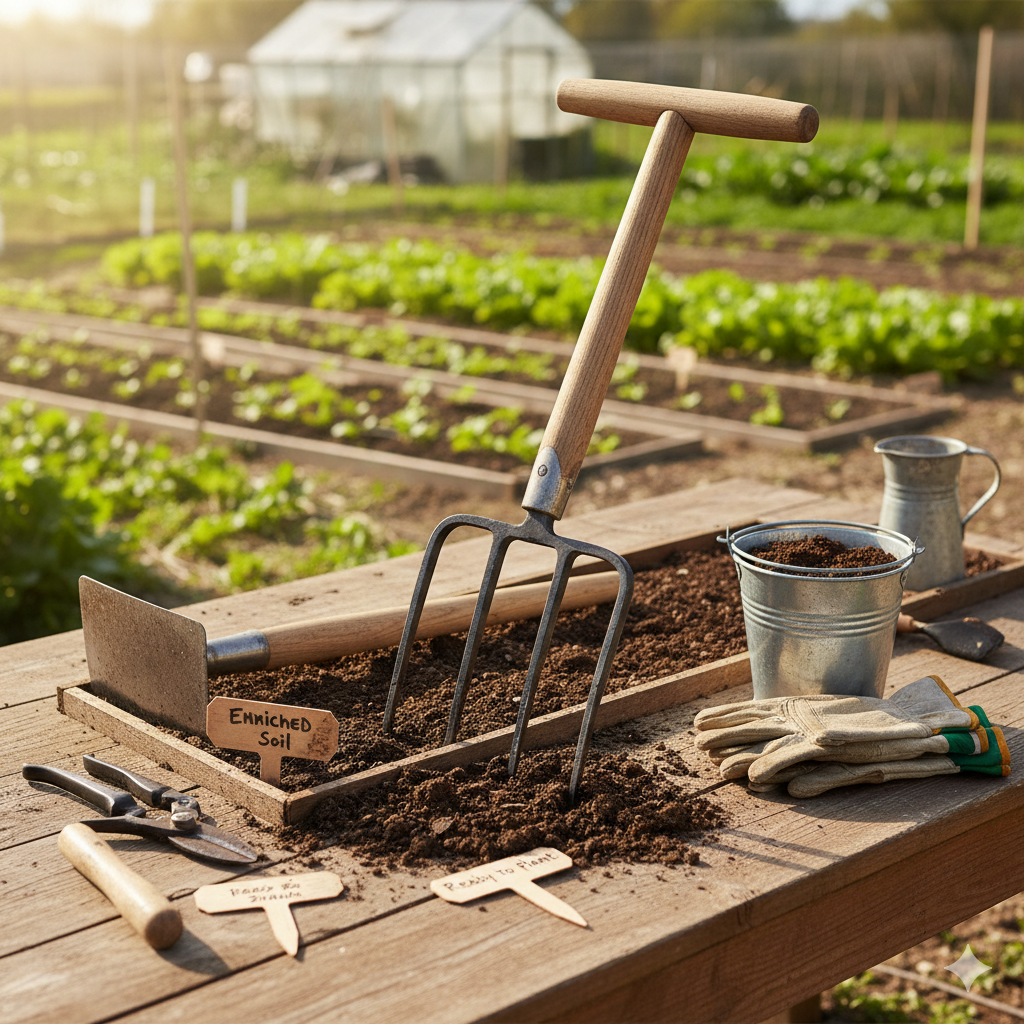
A garden fork is another great tool for soil preparation. It is often used to break up soil in garden beds or small farms. The fork has long, strong tines that penetrate the soil, allowing you to loosen compacted soil without turning it over completely. It’s ideal for mixing compost into the soil.
Advantages of Using a Garden Fork:
-
It is perfect for smaller gardens and raised beds.
-
It helps aerate the soil, improving root growth.
-
It is easier to use than a shovel or spade for some tasks.
Disadvantages of Using a Garden Fork:
-
It requires more physical effort than tillers or plows.
-
It may not be suitable for larger farming areas.
5. Hoes
A hoe is a versatile tool used to break up soil, remove weeds, and shape garden beds. It has a long handle with a flat blade that is ideal for chopping and digging. Hoes are especially useful for weeding and preparing the soil before planting seeds.
Types of Hoes:
-
Draw Hoe: The most common type of hoe, used for digging and weeding.
-
Weeding Hoe: A smaller hoe designed specifically for removing weeds.
Advantages of Using a Hoe:
-
It is perfect for weeding and breaking up soil in garden rows.
-
It is easy to use and doesn’t require much effort.
-
It is inexpensive and widely available.
Disadvantages of Using a Hoe:
-
It may not work well in compacted or rocky soils.
-
It requires manual labor, which can be tiring over time.
6. Rake
A rake is an essential tool for soil preparation. It is used to level the soil, break up clumps, and remove debris. Rakes are also useful for spreading mulch or compost over the soil surface. They come in different shapes and sizes, so you can choose one depending on the size of your garden.
Advantages of Using a Rake:
-
It helps create a smooth, level surface for planting.
-
It is useful for clearing leaves, weeds, or rocks from the soil.
-
It is easy to use and doesn’t require much effort.
Disadvantages of Using a Rake:
-
It is not suitable for breaking up compacted soil.
-
It is less effective for large areas of land.
Preparing Soil for a Successful Harvest
Good farming tools are essential for soil preparation. Whether you are working on a large farm or a small garden, having the right tools can make a huge difference in the quality of your soil and, ultimately, the health of your crops. Tools like plows, tillers, shovels, and hoes help you break up compacted soil, mix in nutrients, and create the perfect environment for plant growth. Using the right tool for the job will save you time and effort while ensuring that your plants get the best start possible.
FAQs
1. How often should I prepare my soil?
Soil preparation is usually done once a year, before planting season. However, it’s important to check your soil’s condition regularly to see if it needs any adjustments.
2. Can I prepare soil without using a plow or tiller?
Yes, you can use a shovel, garden fork, or hoe to prepare smaller areas of soil. These tools work well for small gardens or raised beds.
3. How can I improve soil health during preparation?
Adding compost, manure, or organic matter during soil preparation improves soil health. It helps add nutrients, improves texture, and boosts the overall quality of the soil.
4. Is soil preparation the same for all plants?
No, different plants have different soil requirements. Some plants prefer loose, well-drained soil, while others need denser soil. Always research the specific needs of the plants you are growing.