
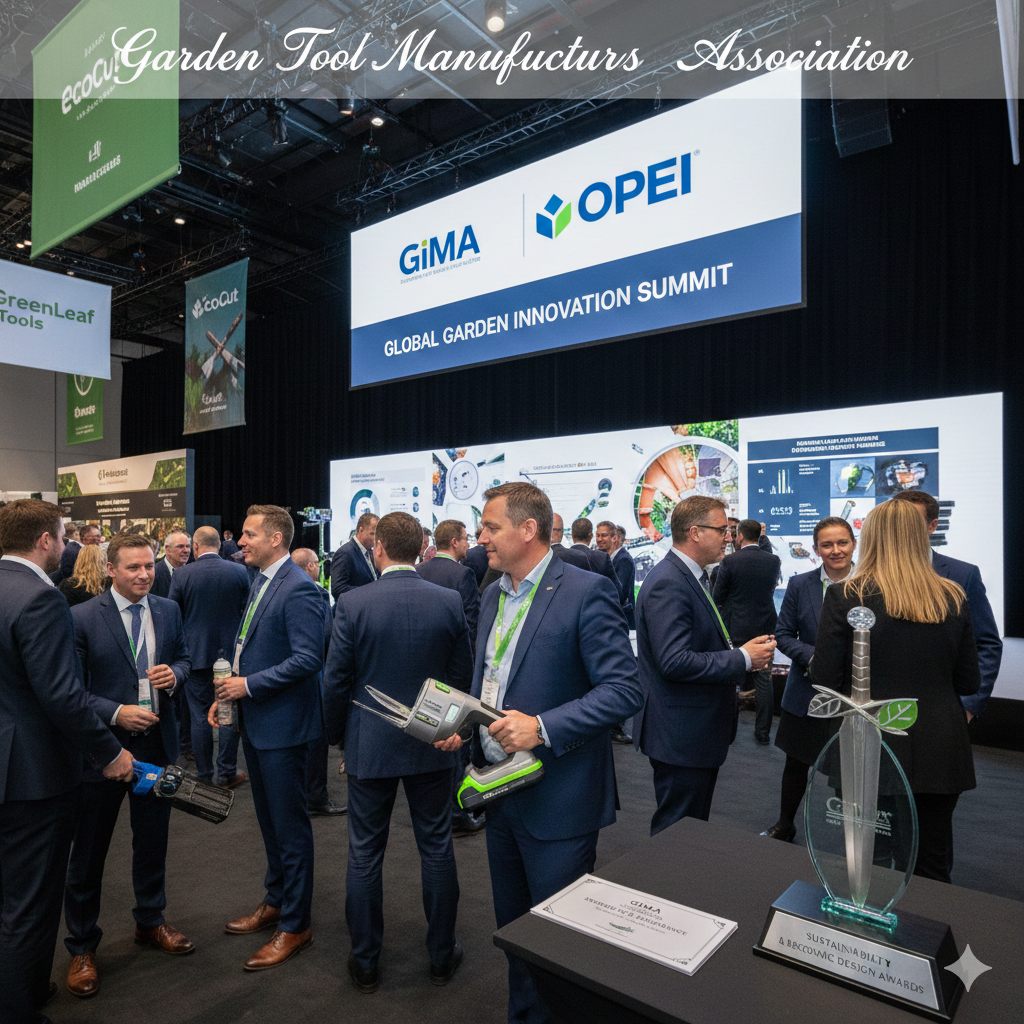
In 2026, the Garden Industry Manufacturers Association (GIMA) and the Outdoor Power Equipment Institute (OPEI) serve as the primary governing bodies and advocacy groups for the global gardening equipment sector. These associations are critical for maintaining safety standards, fostering product innovation, and facilitating networking between manufacturers, retailers, and distributors. For a garden tool manufacturer, membership in these organizations provides access to vital market data, legislative updates, and high-profile industry events like the GIMA Awards, which recognize excellence in sustainable and ergonomic tool design.
I use hand tools often, and they make my work easier. They help me stay organized, finish faster, and keep full control over every step.
The Giants of the Garden: Key Industry Associations
While the gardening world is vast, a few select organizations hold the keys to industry standards. These associations do not just host meetings; they write the rules for how tools are built and sold across the globe.
GIMA (Garden Industry Manufacturers Association)
Based in the UK but wielding significant influence across Europe and North America, GIMA represents a community of over 200 companies. It acts as the primary voice for suppliers, focusing heavily on the bridge between the factory and the retail shelf. For a manufacturer, GIMA is the ultimate networking hub. Their “Day in the Life” events allow small inventors to rub shoulders with giant distributors. Perhaps most famously, they host the annual GIMA Awards, where the “Sword of Excellence” is given to the year’s most groundbreaking tool.
OPEI (Outdoor Power Equipment Institute)
If it has a motor, a battery, or a blade, it likely falls under the jurisdiction of OPEI. Headquartered in the USA, OPEI is the heavy hitter for powered equipment like mowers, trimmers, and chainsaws. They are an ANSI-accredited Standards Development Organization. This means they literally help draft the safety laws that tools must follow to be legal for sale in the United States. In 2026, they are at the forefront of the shift from gas-powered engines to high-capacity lithium-ion technology.
EGMF (European Garden Machinery Industry Federation)
For those operating within the European Union, EGMF is the essential guardian of industry interests. Their focus is deeply rooted in legislation. They work tirelessly on noise reduction standards and environmental impact laws. Because the EU has some of the strictest “Green City” requirements in the world, EGMF ensures that manufacturers can navigate these rules while maintaining the “Free Circulation” of goods across borders.
Gardenex
While other groups focus on manufacturing and policy, Gardenex is all about expansion. This association specializes in international trade. They help garden and leisure brands export their products to over 100 countries. For a mid-sized tool company looking to move from a local market to a global one, Gardenex provides the logistics, research, and marketing muscle to make it happen.
2. Why Trade Associations Matter: More Than Just a Logo
You might wonder why household names like Fiskars, Husqvarna, or Stanley Black & Decker spend significant resources on these memberships. The reality is that in a modern market, no company is an island.
Advocacy and Your Safety
The most critical role of these associations is acting as a liaison between the workshop and the government.
-
Safety Certification: OPEI and EGMF collaborate with the International Organization for Standardization (ISO). Together, they develop testing protocols to ensure a hedge trimmer won’t fail under stress. This protects the user from injury and the manufacturer from devastating lawsuits.
-
Environmental Policy: In 2026, “Green” isn’t just a color; it’s a legal requirement. Associations help members meet the Plastic Packaging Pledge and move toward carbon-neutral shipping. They help brands stay ahead of laws that might otherwise put them out of business.
Market Intelligence: Predicting the Next Big Bloom
Data is the lifeblood of manufacturing. GIMA, for instance, provides quarterly “Barometer of Trade” reports. These documents offer a real-time look at what consumers are actually buying. If the data shows a 20% spike in urban balcony gardening, manufacturers can pivot their production from heavy-duty tillers to compact, ergonomic hand tools before the season even begins.
The “Speed Dating” of Retail
Associations host “Buyer Connect” events that function like professional speed dating. A small start-up with a brilliant new weeding tool might never get an appointment with a head buyer at Home Depot, Lowe’s, or B&Q on their own. Through an association event, they get ten minutes of undivided attention from the people who decide what ends up on the shelves.
3. Innovation in 2026: Sustainability and Ergonomics
The gardening industry has undergone a massive transformation over the last few years. The associations have been the primary drivers of this change, pushing for a future that is kinder to both the planet and the human body.
The Push for “Circular” Tools
Sustainability is no longer a buzzword; it’s a metric for success. The GIMA Sustainability Award is now one of the most prestigious trophies a company can win. In 2026, winners are often companies using “closed-loop” systems. This is where a manufacturer takes back old, broken tools from customers, melts down the metal and plastic, and re-forges them into brand-new products.
The Ergonomic Revolution
As the “Baby Boomer” generation continues to enjoy gardening into their later years, the demand for “low-impact” tools has skyrocketed. Associations now work directly with physical therapists to create Ergonomic Certifications. When you see a tool with an association’s ergonomic seal, you know it has been tested to reduce wrist strain and maximize leverage, making gardening accessible for everyone, regardless of age or grip strength.
Battery Standardization: The “Universal Power” Goal
One of the biggest frustrations for gardeners has always been having a different battery for every tool. In 2026, OPEI has led a massive initiative for Battery Standardization. By encouraging brands to share common battery platforms, the industry is significantly reducing electronic waste (e-waste) and making life easier for the consumer.
4. Comparing the Major Players at a Glance
| Association | Primary Region | Core Focus | Top Member Benefit |
| GIMA | UK / North America | Retail & Marketing | Direct links to major retail buyers |
| OPEI | North America | Power & Safety | Influence over ANSI safety standards |
| EGMF | Europe | Machinery & Environment | Help with EU noise/emission laws |
| Gardenex | Global | Export & Trade | Logistics for selling in 100+ countries |
5. Frequently Asked Questions
Can a home gardener join these groups?
No. These are B2B (Business-to-Business) organizations. Their mission is to support the professionals who design, build, and ship the tools. However, gardeners benefit immensely from the standards these groups set.
Do these associations make tools more expensive?
Actually, the opposite is often true. By creating universal safety standards, associations allow a company to create one version of a tool that can be sold in multiple countries. This “economy of scale” reduces manufacturing costs, which helps keep retail prices stable.
What exactly is the GIMA “Sword of Excellence”?
It is the “Oscar” of the gardening world. It is awarded once a year to a product that demonstrates exceptional innovation, retail potential, and manufacturing quality. If a tool wins this, you can bet it will be a bestseller.
How do I find out if a brand is a member?
Most reputable manufacturers will display the GIMA, OPEI, or EGMF logo on their website or packaging. Being a member is a sign of professional integrity. You can also check the “Member Directory” on the associations’ official websites.
Conclusion: A Unified Voice for Quality
The role of a Garden Tool Manufacturers Association is to ensure that when you head out to your backyard on a Saturday morning, your tools work exactly as they should. These organizations provide a unique space where competitors can put aside their rivalries to collaborate on safety and environmental health, while still competing to bring you the most innovative designs.