
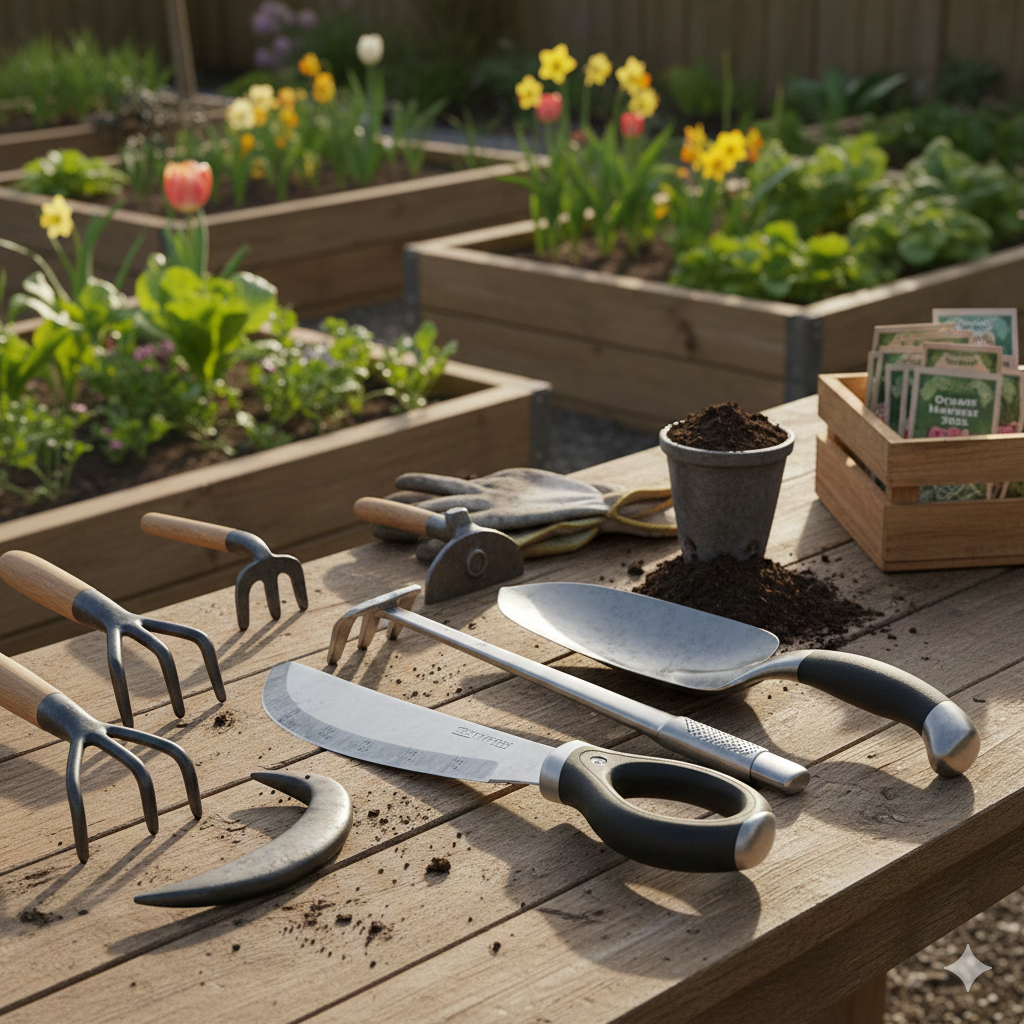
Years of work in the dirt teach a hard lesson. Cheap trowels break often. Wrists can ache for days after a weekend of planting. But a big truth remains. The right tool changes everything.
In 2026, the goal is not just to “dig holes.” The focus is on soil care. It is about protecting tiny roots. A tool should feel like a part of the hand. This guide shares the best finds. These tools save the back and the plants.
Why the “Right” Digging Tool Matters More Today
In the past, a hand trowel was just a piece of stamped metal stuck into a wooden peg. Today, the demands of the 2026 garden are different. Urban gardening, high-density “food forests,” and intricate perennial borders require surgical precision. You need tools that can navigate the “root zone” of a prize rose bush without causing collateral damage.
Furthermore, the materials have evolved. We’ve seen a move away from cheap, brittle metals toward boron steel and high-carbon alloys. These materials offer what experts call a “self-sharpening” edge. As you dig, the friction with the soil actually hones the blade, allowing it to slice through compacted clay and thick root mats with roughly 30% less physical force than the tools of a decade ago.
The “Must-Have” Precision Digging Arsenal
If you were to peek into the tool belt of a professional landscaper today, you wouldn’t just see one trowel. You would see a curated selection of “precision hitters.” Here are the essential handheld tools for 2026.
The Hori Hori: The Japanese Swiss Army Knife
The Hori Hori (often called a Japanese Digging Knife) has officially claimed the title of the most versatile tool in the shed. Its design is genius in its simplicity: a concave, double-sided blade where one side is razor-sharp and the other is serrated.
-
Best For: Slicing through plastic mulch bags, sawing through tangled perennial roots, and digging deep, narrow holes.
-
The 2026 Edge: Most modern versions now feature laser-etched depth markings, making it impossible to mess up your bulb planting depths.
The Reinforced Hand Trowel (The Transplanter)
Forget the wide, scoop-like trowels of the past. The 2026 preference is for the Narrow Transplanter. These tools are built from a single piece of forged stainless steel. By eliminating the “tang” (the joint where the blade meets the handle), manufacturers have solved the number one cause of tool failure: snapping under pressure.
The Ho-mi (Korean Hand Plow)
If you haven’t used a Ho-mi, you are missing out on an ergonomic masterpiece. Shaped like a miniature plow, it acts as a literal extension of your arm.
-
The Point: Perfect for drawing long, straight seed furrows.
-
The Blade: Use the side to mound soil over seeds or to pry up stubborn rocks that a trowel can’t budge.
The Three-Pronged Hand Cultivator
Think of this as your “pre-digging” specialist. In mid-summer, when the soil is baked into a hard crust, a trowel will often bounce right off the surface. The hand cultivator breaks that surface tension, aerating the top layer and preparing the ground for deeper excavation.
Ergonomic Innovations: Gardening Without the Grief
One of the biggest breakthroughs in 2026 is the focus on Human-Centric Design. We’ve realized that gardening shouldn’t be a test of endurance. Modern tools are now engineered to prevent repetitive strain injuries like Carpal Tunnel Syndrome.
Radius and “O-Grip” Handles
Traditional straight handles force your wrist into an unnatural, cocked position. Innovative brands have introduced the Radius Grip—a circular or D-shaped handle. This design allows you to keep your wrist in a “neutral” position, transferring the digging power from your small wrist joints to your much stronger shoulder and bicep muscles.
“Natural Grip” Thumb Throttles
Look for trowels that feature a molded thumb rest or “throttle” at the top of the grip. This small indentation provides a pivot point. When you are trying to lever a heavy plant out of its pot, this thumb rest gives you the extra torque needed without straining your palm.
Advanced Lightweight Materials
-
Carbon Fiber Shafts: Once reserved for aerospace and high-end bicycles, carbon fiber is now appearing in premium garden tools. It’s incredibly light and, more importantly, it absorbs vibration. If you have arthritis, a carbon fiber handle will feel significantly more comfortable than cold, vibrating steel.
-
Non-Stick Ceramic Coatings: New “clay-release” coatings ensure that wet, heavy soil slides right off the blade. This keeps the tool light and saves you from the constant “shake and scrape” routine.
Solving Specific Soil Challenges
Your choice of tool should be dictated by your geography. A tool that works in the sandy soils of Florida will fail miserably in the rocky “hardpan” of the Northeast.
Dealing with Rocks? Use a Mini-Mattock
If your “garden” feels more like a quarry, a standard trowel won’t cut it. A hand-held mini-mattock features a heavy, forged head with a pick on one side and an adze on the other. It uses weight and momentum to shatter hard ground and pry out stones.
Deep Weeding: The Dandelion Fulcrum
For weeds with long taproots (like dandelions or docks), the Fulcrum Weeder is essential. It looks like a long, forked tongue with a curved metal “rocker” on the back. You push the fork into the ground, lean the handle back on the rocker, and the weed pops out like a cork from a bottle—zero tugging required.
Tool Comparison Matrix (2026 Standards)
| Tool Name | Primary Purpose | Material Benefit | Strength Rating |
| Hori Hori Knife | Root cutting/Deep holes | Serrated High-Carbon Steel | 5/5 |
| Ergonomic Trowel | General Planting | Aluminum Alloy / O-Grip | 4/5 |
| Hand Ho-mi | Furrowing & Mounding | Forged Iron | 4/5 |
| Bulb Planter | Perfect Cylinders | Chrome-Plated Steel | 3/5 |
| Hand Mattock | Breaking Hardpan | Heavy Alloy Steel | 5/5 |
Pro-Tips for Maintenance and Longevity
In 2026, the best tools are an investment, not a disposable purchase. To keep them performing at peak levels:
-
The Sand Bucket Trick: Keep a bucket of sand mixed with a little bit of mineral oil in your shed. After use, plunge your metal tools into the sand a few times. It cleans the dirt off and leaves a microscopic layer of oil to prevent rust.
-
Edge Maintenance: Use a simple mill file or a diamond whetstone once a month. A sharp trowel requires significantly less effort to push into the ground.
-
Handle Care: If you still use wooden-handled tools, rub them with linseed oil once a year to prevent splintering and weather damage.
Frequently Asked Questions (FAQs)
Q: Is carbon steel really worth the extra maintenance over stainless steel?
A: For the average hobbyist, stainless steel is great because it’s “set it and forget it.” However, if you are digging daily, carbon steel stays sharper much longer. It’s the difference between a butter knife and a chef’s knife.
Q: Can I use a hand trowel in heavy clay soil?
A: Only if it’s a “solid-socket” or “one-piece” forged trowel. Most “consumer-grade” trowels will bend at the neck when used as a lever in heavy clay. For clay, a hand-held garden fork or a Ho-mi is actually a better choice.
Q: Why are “ergonomic” tools so much more expensive?
A: The cost comes from the specialized molds and multi-material grips (like gel-padding and carbon fiber). Think of it as an investment in your health—it’s much cheaper than physical therapy for a strained wrist!
Final Thoughts: The Right Tool for the Depth
Ultimately, digging is the most fundamental act of gardening. By selecting a tool that respects both the soil and your body, you transform a chore into a craft. In 2026, the trend is clear: buy better, not more. A single, high-quality Hori Hori or a well-balanced ergonomic trowel will outlast five cheap alternatives and make every minute in the garden more productive.