
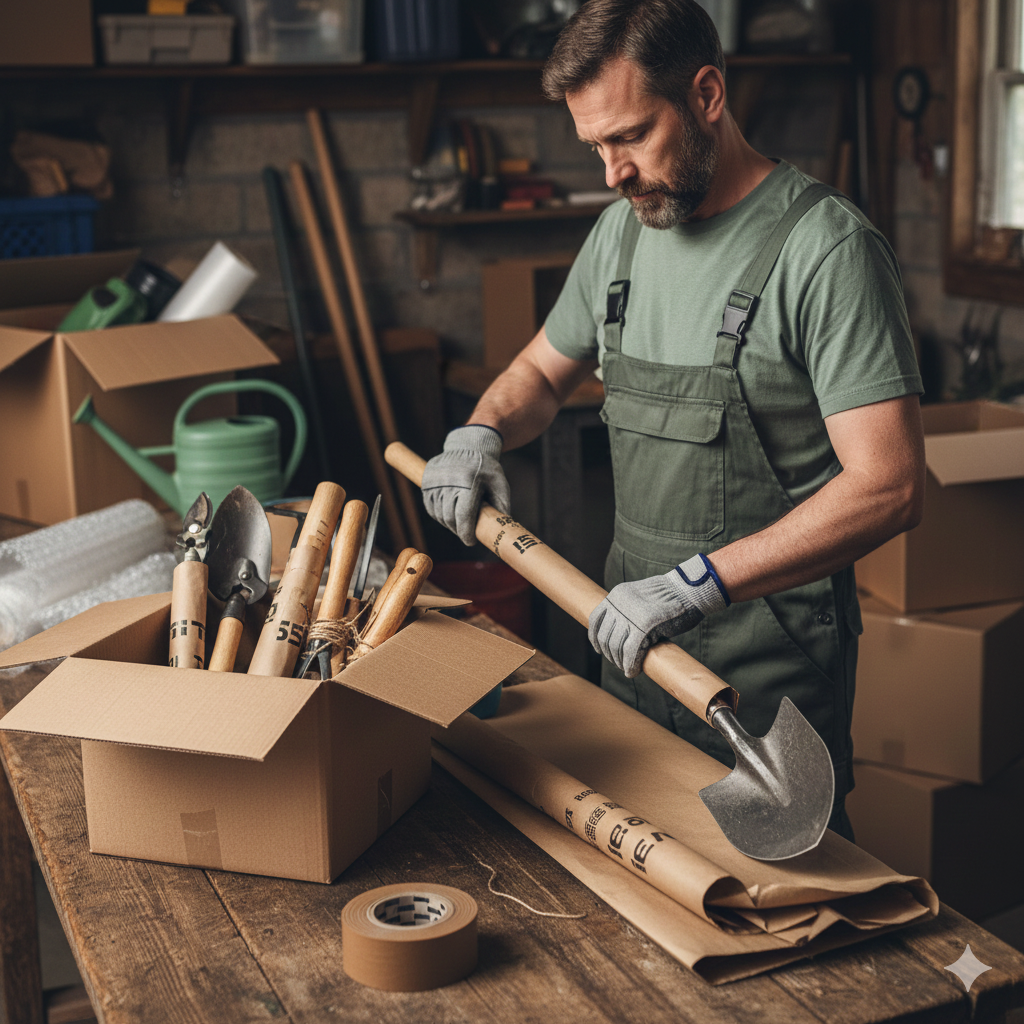
To pack garden tools safely for a move, you need to clean them, drain any fuel or oil, disassemble large equipment, bundle and wrap tools (especially sharp or long‑handled ones), box or secure everything with padding, label boxes clearly, and load carefully.
I work with many hand tools for my projects. The right ones take care of the slow parts, like shaping, cutting, and small fixes. They let me focus more on doing the job well instead of spending long hours on small steps.
Why good packing matters
-
Dirty tools can bring soil, pests, or plant diseases into your new home. Little Guys Movers+1
-
Fuel or oil left in power equipment can leak or pose a fire hazard during transport — many movers won’t move gear that still has fluids. moving.com+2moving.com+2
-
Proper wrapping and padding protect both your tools and other items from damage. Olympia Moving & Storage+1
How to Pack Garden Tools for Moving
Exact answer: To pack garden tools safely for a move, you need to clean them, drain any fuel or oil, disassemble large equipment, bundle and wrap tools (especially sharp or long‑handled ones), box or secure everything with padding, label boxes clearly, and load carefully.
Why good packing matters
-
Dirty tools can bring soil, pests, or plant diseases into your new home. Little Guys Movers+1
-
Fuel or oil left in power equipment can leak or pose a fire hazard during transport — many movers won’t move gear that still has fluids. moving.com+2moving.com+2
-
Proper wrapping and padding protect both your tools and other items from damage. Olympia Moving & Storage+1
Step 1 – Prepare Your Tools
Why preparation is crucial:
-
Prevent spills and leaks during transit.
-
Avoid damage to tools or other items.
-
Reduce fire hazards from fuel or oil.
Steps to prepare tools:
-
Clean all tools:
-
Brush off dirt, mud, and plant debris.
-
Let tools dry completely.
-
-
Drain fuel and oil:
-
Remove gasoline from lawnmowers, trimmers, chainsaws, blowers.
-
Drain bar oil and other lubricants.
-
Movers often cannot pack fuel-filled equipment.
-
-
Remove batteries and cords:
-
Remove lithium-ion batteries and pack separately.
-
Tape terminals to prevent short circuits.
-
Coil cords and secure with rubber bands or Velcro.
-
-
Disassemble large tools:
-
Remove handles, wheels, guards, or attachments.
-
Keep screws, bolts, and small parts in labeled bags.
-
Tape bags to the main tool or place in a labeled box.
-
Optional: take photos of tools for easy reassembly.
-
Step 2 – Pack Long-Handled Tools
Bundling long-handled tools:
-
Group tools by size and type (e.g., shovels, rakes, hoes).
-
Secure bundles with rope, zip ties, or tape.
-
Pad handles to prevent scratches.
Protect sharp edges:
-
Wrap pruners, shears, axes, hoes, or blades in:
-
Cardboard
-
Bubble wrap
-
Old towels
-
-
Tape securely and label as “Sharp Tools.”
Boxing long-handled tools:
-
Use tall boxes or wardrobe boxes.
-
Stand tools upright if possible.
-
Fill gaps with crumpled paper, foam, or packing peanuts.
Step 3 – Pack Small Hand Tools
Sorting small tools:
-
Cutting tools: pruners, shears, loppers.
-
Digging tools: trowels, hand spades.
-
Measuring tools: levels, tape measures.
Wrapping small tools:
-
Wrap individually with cloth, bubble wrap, or old towels.
-
Secure with tape or rubber bands.
-
Protect locking mechanisms on cutting tools.
Boxing small tools:
-
Use sturdy small boxes or toolboxes.
-
Add crumpled paper or foam to prevent movement.
-
Label as “Sharp Tools Inside.”
Step 4 – Pack Power Tools
Types of power tools:
-
Lawn mowers
-
Electric or gas trimmers
-
Chainsaws
-
Hedge trimmers
-
Garden drills
Preparation before packing:
-
Drain all fuel and lubricants.
-
Remove batteries and cords; pack separately.
-
Remove attachments (blades, guards, bags) and wrap separately.
Wrapping and boxing:
-
Use original cases if available.
-
Wrap with moving blankets or bubble wrap.
-
Pack in sturdy boxes with cushioning.
-
Mark clearly with “Garden Power Tools.”
Extra protection:
-
Wrap blades in cardboard or tape.
-
Add silica gel packets to prevent moisture damage.
Step 5 – Pack Heavy Garden Equipment
Examples:
-
Lawn mowers
-
Wheelbarrows
-
Garden tillers
-
Edgers
-
Large gardening carts
Steps for packing heavy equipment:
-
Clean off dirt and debris.
-
Drain fuel, oil, and lubricants.
-
Wrap sharp parts with cardboard or towels.
-
Wrap handles with moving blankets.
-
Tie cords or straps securely.
Loading in truck or trailer:
-
Place heavy items at the bottom or against walls.
-
Secure upright or flat with straps to prevent rolling.
-
Avoid stacking fragile items atop heavy equipment.
Step 6 – Pack Storage Items
-
Empty and clean toolboxes, storage racks, and cabinets.
-
Remove hooks, shelves, or detachable parts.
-
Wrap shelves or fragile parts in bubble wrap.
-
Seal and label boxes: “Garden Storage – Empty Rack.”
Step 7 – Label & Load Boxes
Labeling tips:
-
Indicate contents: “Garden Tools – Hand Tools,” “Sharp Tools,” “Power Tools.”
-
Add warnings: “Fragile,” “This Side Up,” “Sharp Edges.”
Loading order:
-
Heavy equipment at bottom or against walls.
-
Bundled long-handled tools upright or tied securely.
-
Boxes with hand tools on top.
-
Cushion boxes to prevent shifting.
Step 8 – Safety & Movers Requirements
-
Movers generally refuse fuel-filled tools.
-
Hazardous items (fertilizers, pesticides, propane) must be removed.
-
Double-wrap blades to prevent injury.
-
Avoid overloading boxes.
Step 9 – Common Packing Mistakes
| Mistake | Why Problematic | How to Avoid |
|---|---|---|
| Leaving fuel/oil in equipment | Fire hazard; movers may refuse | Drain fuel and oil completely |
| Packing dirty tools | Soil or pests can spread | Clean and dry thoroughly |
| Not wrapping sharp edges | Risk of injury or damage | Wrap with cardboard or blankets; label boxes |
| Overloading boxes | Difficult to carry, may break | Distribute weight; use proper boxes |
| Mixing tools with chemicals | Risk of spill or hazard | Move hazardous items separately |
Step 10 – Packing Materials Checklist
-
Heavy-duty moving boxes (small, medium, tall)
-
Wardrobe boxes for long tools
-
Bubble wrap
-
Packing paper
-
Moving blankets or old towels
-
Cardboard strips for blades
-
Zip ties, rope, rubber bands
-
Packing tape and labels
-
Plastic bags for screws/bolts
-
Silica gel packets (optional)
Step 11 – Unpacking & Setup
-
Inspect tools for damage.
-
Reassemble disassembled tools using labeled parts.
-
Lubricate moving parts and tighten screws.
-
Clean surfaces of dust or residue.
-
Store in dry, ventilated area.
-
Refill fuel or oil only when ready to use.
FAQ
-
Can movers transport gas-powered tools?
-
Only if fuel and oil are completely drained.
-
-
How to pack long-handled tools?
-
Bundle by type, wrap sharp ends, and use tall boxes.
-
-
Should sharp tools be wrapped?
-
Yes, wrap with cardboard, bubble wrap, or towels; label clearly.
-
-
Do power tools need special boxes?
-
Use original cases or sturdy boxes with padding.
-
-
What tools shouldn’t go in sealed boxes?
-
Tools with fuel, chemicals, or propane tanks.
-
Conclusion
Packing garden tools for a move doesn’t have to feel overwhelming. By cleaning them, draining fluids, wrapping blades safely, bundling long-handled tools, boxing carefully, and labeling clearly, you keep tools safe and protect your other belongings. A bit of planning before moving day helps avoid hazards, ensures smooth transport, and makes unpacking and setup easier at your new home