
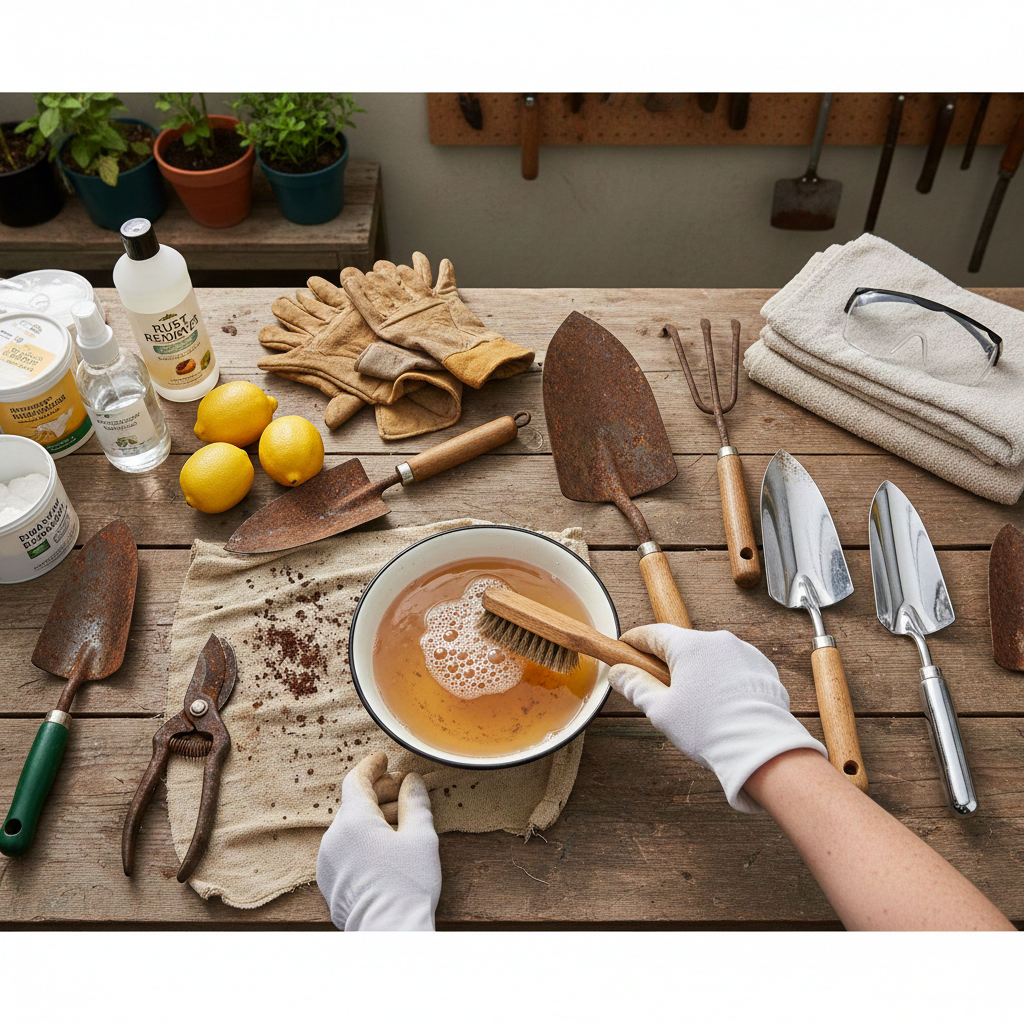
Removing rust from metal garden tools is simple if you follow the right steps. First, determine whether the rust is light or heavy. For heavy rust, soak the tools in white vinegar, while light rust can be treated with a baking soda paste. After soaking, scrub off the loosened rust using a wire brush, stiff brush, or steel wool. Rinse the tools thoroughly, dry them completely, and finally, apply a thin layer of protective oil to prevent rust from returning.
I work with many hand tools for my projects. The right ones take care of the slow parts, like shaping, cutting, and small fixes. They let me focus more on doing the job well instead of spending long hours on small steps.
Understanding Rust and Why It Forms
Rust develops when iron or steel comes into contact with oxygen and moisture. Garden tools are particularly prone to rust because they are often exposed to soil, water, and humid air. There are two main types of rust. Surface rust appears as light reddish-brown spots and is easy to remove. Deep rust, also known as corrosion, penetrates the metal and weakens it, requiring more intensive cleaning methods. Rust reduces a tool’s efficiency, weakens the metal, and spreads quickly if left untreated. Detecting rust early is essential because it is easier and less costly to remove while preventing permanent damage to your tools.
Safety and Preparation Before Rust Removal
Before removing rust, gather all necessary materials. You will need gloves and protective eyewear, white or distilled vinegar, baking soda, steel wool, a wire brush, a stiff brush, or a toothbrush. A container for soaking or a cloth to wrap larger tools is also helpful. Clean cloths or towels are needed for drying, and a protective oil such as mineral oil, linseed oil, or WD‑40 is essential to prevent rust from returning.
Begin by choosing a well-ventilated workspace to avoid fumes. Lay newspaper or a tray under your workspace to catch rust flakes and wear gloves to protect your hands. Remove dirt and debris from the tools before starting and assess the rust severity to determine the best cleaning method. For large tools that cannot fit into a container, wrapping the rusty areas with a vinegar-soaked cloth works well. Small brushes are useful for cleaning hinges, joints, and tight spots.
Method 1: White Vinegar Soak for Heavy Rust
For tools with heavy rust, a vinegar soak is highly effective. Submerge the rusty metal parts in a container filled with white vinegar. If the tool is too large, wrap the rusty sections in a vinegar-soaked cloth. Allow the tools to soak for 12 to 24 hours. Very rusty tools may require overnight soaking.
After soaking, use a wire brush, stiff brush, or steel wool to scrub away the loosened rust. A toothbrush can help clean small crevices and joints. Once the rust is removed, rinse the tools thoroughly with clean water to remove any vinegar and residue. Dry the tools completely with a towel or cloth, and if possible, leave them in sunlight to remove remaining moisture. Finally, apply a thin layer of mineral oil, linseed oil, or WD‑40 to protect the metal. Pay extra attention to moving parts, such as hinges or pruners, to ensure smooth operation. Adding a tablespoon of salt to vinegar before soaking can help dissolve stubborn rust, while gentle scrubbing prevents damage to delicate surfaces.
Method 2: Baking Soda Paste for Light Rust
For tools with light rust, a baking soda paste works effectively. Mix three to four tablespoons of baking soda with a small amount of water or vinegar to form a thick paste. Spread the paste generously over the rusted areas and let it sit for 30 minutes to one hour.
After the paste has worked on the rust, scrub the surface with a toothbrush, stiff brush, or steel wool. Rinse the tools thoroughly to remove all residue, then dry completely. Finally, apply a thin layer of protective oil to prevent the rust from returning. Baking soda paste is safe for delicate tools, quick to prepare, and works well on small rust patches.
Alternative Rust Removal Methods
Besides vinegar and baking soda, other methods can help remove rust. Aluminum foil can be dipped in water and rubbed against lightly rusted surfaces. Electrolysis is effective for heavily rusted or antique tools, although it requires a DIY setup with an electrolyte solution. Commercial rust removers are also available, but they should be used with care. Follow the manufacturer’s instructions, wear gloves, and rinse thoroughly after use. No matter which method you choose, always apply a protective oil afterward to prevent rust from forming again.
Preventing Rust on Garden Tools
Preventing rust is as important as removing it. Dry your tools after every use to eliminate moisture. Oil metal surfaces regularly using mineral oil, linseed oil, or WD‑40. Store tools indoors or hang them off the ground to avoid contact with soil and moisture. For humid environments, silica gel packs can help absorb excess moisture. Inspect your tools monthly to catch early signs of rust, and maintain wooden handles with linseed or wood-safe oil to prevent water absorption and cracking. Following these preventive steps ensures your tools remain strong, sharp, and safe to use.
Maintaining Your Tools
After each use, brush off soil and debris, then wipe the tools dry. On a monthly or seasonal basis, inspect the tools for rust spots, sharpen blades if necessary, and oil all metal surfaces. Before storing tools for a long period, give them a deep clean, remove any rust completely, and apply a protective oil layer. Tools showing even minor rust should be treated immediately using baking soda paste or a vinegar soak to prevent further damage. Consistent maintenance keeps garden tools in optimal condition for years.
Alternative Rust Removal Methods
Other Options:
-
Aluminum Foil Scrub: Rub rusted surface with aluminum foil dipped in water.
-
Electrolysis: DIY method for heavily rusted or antique tools.
-
Commercial Rust Removers: Follow manufacturer’s instructions, wear gloves, and rinse thoroughly.
Comparison Table:
| Method | Difficulty | Effectiveness | Safety |
|---|---|---|---|
| Sand/Sandpaper | Easy | Moderate | Safe |
| Aluminum Foil | Easy | Light rust only | Safe |
| Vinegar Soak | Easy | Heavy rust | Safe |
| Electrolysis | Medium | Heavy rust | Caution |
| Commercial Acid | Medium | Heavy rust | Requires care |
Eco-Friendly Rust Removal Tips
To remove rust in an eco-friendly way, rely on household items like vinegar, baking soda, or lemon juice. Avoid harsh chemicals that may harm soil or plants. Smooth any sharp edges after cleaning to prevent moisture accumulation. Store tools upside down or under a protective cover to prevent water from pooling on the metal surfaces. These small changes help maintain tool longevity while reducing environmental impact.
Troubleshooting Common Rust Issues
If rust does not come off, repeat the vinegar soak or try the salt-vinegar method for stubborn corrosion. Tools that re-rust quickly likely were not dried or oiled properly after cleaning. Pitted metal or deep corrosion may compromise tool safety, and such tools should be replaced. Wooden handle damage can be fixed by sanding rough patches and applying a wood-safe oil to prevent further moisture absorption.
Frequently Asked Questions (FAQ)
How often should I check my garden tools for rust? Tools should be checked after each use and during a monthly inspection, especially before storing them for the season.
Can WD‑40 replace oil for rust prevention? Yes. WD‑40 displaces moisture and creates a protective layer on metal surfaces.
Is vinegar safe for all garden tools? Vinegar works best on iron and steel tools. Test coated or painted tools before applying, and avoid using it on aluminum.
How can I prevent rust during humid or rainy seasons? Dry your tools after use, apply oil regularly, store them indoors, and use silica gel packs to reduce humidity.
Conclusion
Rust can damage garden tools, reduce their efficiency, and shorten their lifespan. Simple solutions like white vinegar soaks and baking soda paste can effectively remove rust. Combining rust removal with regular maintenance, proper drying, and protective oiling prevents rust from returning. By following these easy steps, you can ensure your garden tools remain rust-free, strong, and ready to use for years to come.